



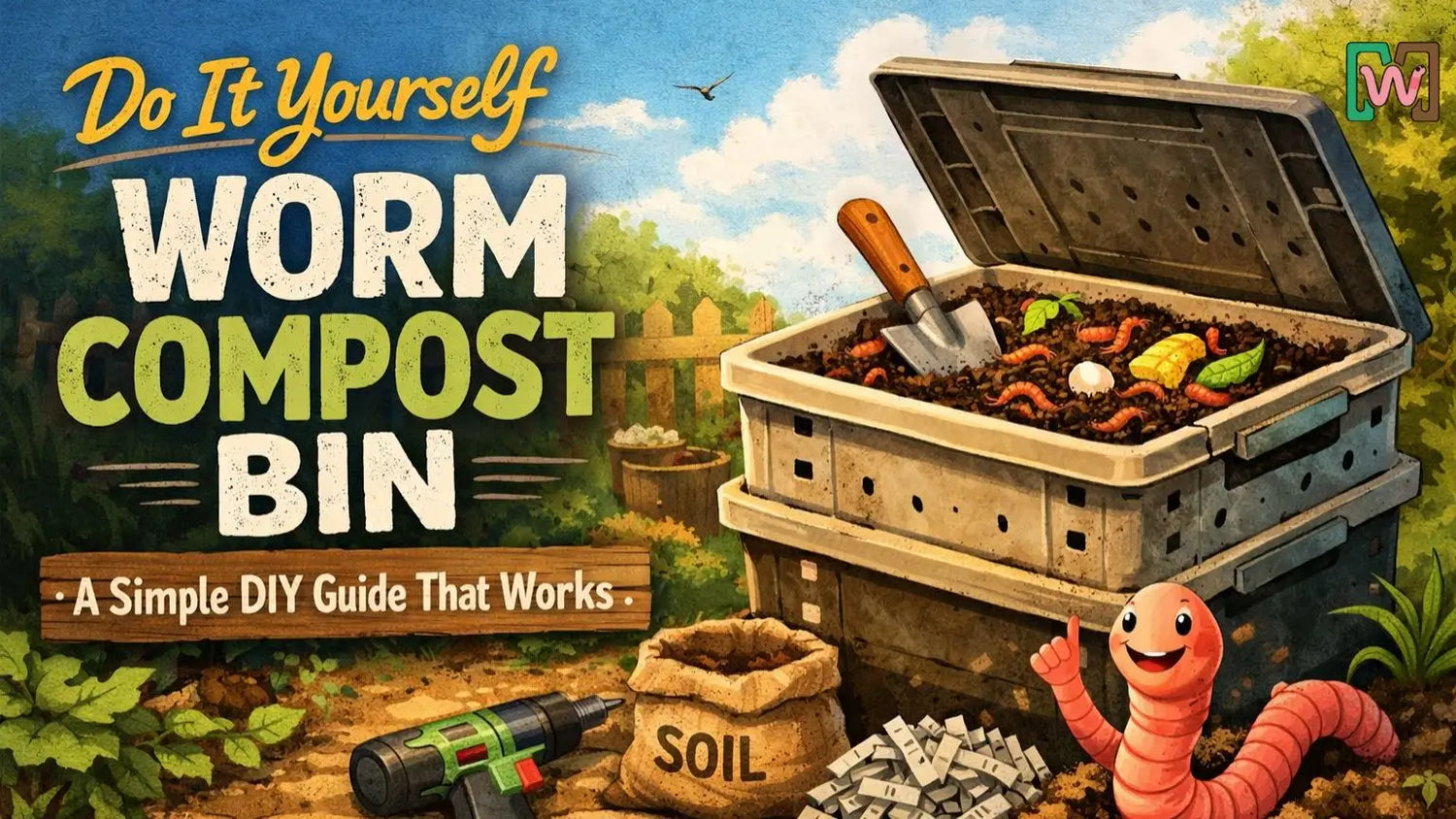
When I first started composting, I wanted something easy. I did not want a big system. I did not want expensive tools. I just wanted a simple way to turn food scraps into compost.
That is when I learned how to build a do it yourself worm compost bin.
In this guide, I will show you exactly how I build a diy worm farm step by step. I will explain what you need, how to set it up, and how to keep it working. I will keep everything simple, clear, and backed by trusted information so you can start with confidence.
What Is a Do It Yourself Worm Compost Bin?
A do it yourself worm compost bin is a container where worms break down food scraps into compost.
Instead of throwing food away, you feed it to worms. The worms turn it into rich compost called worm castings.
According to the United States Environmental Protection Agency, composting helps reduce food waste and creates valuable soil nutrients.
A DIY worm bin is:
- Low cost
- Easy to build
- Great for beginners
Why I Recommend a DIY Worm Farm
I always suggest starting with a diy worm farm because it keeps things simple.
You get:
- Full control over setup
- Lower cost than store systems
- Easy learning process
You do not need a fancy system to succeed. Worms care about conditions, not appearance.
Must Read : Worm Bin Problems: Guide to the 6 Most Common Worm Bin Problems (and How to Solve Them!)
What You Need to Build a DIY Worm Compost Bin
Before I start building, I gather a few simple items.
You will need:
- A plastic storage bin with lid
- A drill or sharp tool
- Newspaper or cardboard
- Water
- Compost worms (red wigglers)
- Food scraps
That is it. No special equipment needed.
Step 1: Choose the Right Container
The container is the base of your diy worm compost bin.
I use a plastic tote because it is:
- Cheap
- Easy to find
- Durable
Size tip:
- Small bin for beginners
- Medium bin for families
Make sure the bin has a lid to keep moisture in and pests out.
Step 2: Add Air Holes and Drainage
Worms need oxygen to live.
Steps:
- Drill small holes on the sides
- Drill holes on the bottom
- Place a tray under the bin
This allows:
- Airflow
- Excess moisture to drain
Without this, the bin can become too wet and smelly.
Step 3: Prepare Bedding
Bedding is the most important part of your do it yourself worm compost bin.
Good bedding materials:
- Shredded newspaper
- Cardboard
- Coconut coir
Steps I follow:
- Soak bedding in water
- Squeeze out extra water
- Fluff it up
The bedding should feel like a wrung-out sponge.
This keeps worms comfortable and able to breathe.
Step 4: Add Worms
For a diy worm farm, I always use red wigglers.
These worms:
- Eat food scraps
- Live near the surface
- Reproduce quickly
Place worms on top of the bedding. They will move down on their own.
Step 5: Add Food
Food is fuel for your system.
Good foods:
- Vegetable scraps
- Fruit scraps (small amounts)
- Coffee grounds
- Crushed eggshells
Avoid:
- Meat
- Dairy
- Oily food
The United States Department of Agriculture explains that worms feed on decomposing organic matter and microbes.
Always bury food under bedding.
Step 6: Maintain Your DIY Worm Compost Bin
Once your diy worm compost bin is running, maintenance is simple.
Check weekly:
- Moisture level
- Food levels
- Smell
Healthy bins smell like soil, not garbage.
Must Read : Composting and Bin Management
How Long Does It Take to Make Compost?
Most bins produce compost in:
- 2 to 3 months
You will see dark, crumbly material. That is finished worm compost.
How to Harvest Compost from Your DIY Worm Farm
There are simple ways to harvest.
Method I use:
- Push compost to one side
- Add fresh bedding and food to the other side
- Wait for worms to move
Then collect finished compost.
Where to Keep Your DIY Worm Compost Bin
Your bin can go:
- Under the sink
- In a garage
- In a basement
- Outdoors in shade
Keep it away from:
- Direct sun
- Extreme cold
Worms like stable conditions.
Benefits of a DIY Worm Compost Bin
Here is why I love this system:
- Reduces kitchen waste
- Produces natural fertilizer
- Saves money
- Works in small spaces
Research from Cornell Waste Management Institute shows vermicomposting improves soil health and microbial activity.
Must Read : How to Catch Earthworms: A Simple, Proven Guide That Works
Common Mistakes to Avoid
I made these mistakes when I started.
✗ Overfeeding
✗ Too much water
✗ No airflow
✗ Using wrong worms
Fixing these early keeps your system healthy.
Is a DIY Worm Compost Bin Worth It?
Yes. It is one of the easiest ways to:
- Reduce waste
- Improve soil
- Learn composting
You do not need perfection. You need consistency.
How to Scale Your DIY Worm Farm
Once you get comfortable, you can:
- Add a second bin
- Increase feeding
- Expand worm population
A small system can grow over time.
Final Thoughts
Building a do it yourself worm compost bin is simple. You need a container, bedding, worms, and food. That is it.
I always say this: focus on the basics. Keep it moist. Feed lightly. Check often.
Worms will do the rest.





Dejar un comentario
Todos los comentarios se revisan antes de su publicación.
Este sitio está protegido por hCaptcha y se aplican la Política de privacidad de hCaptcha y los Términos del servicio.