



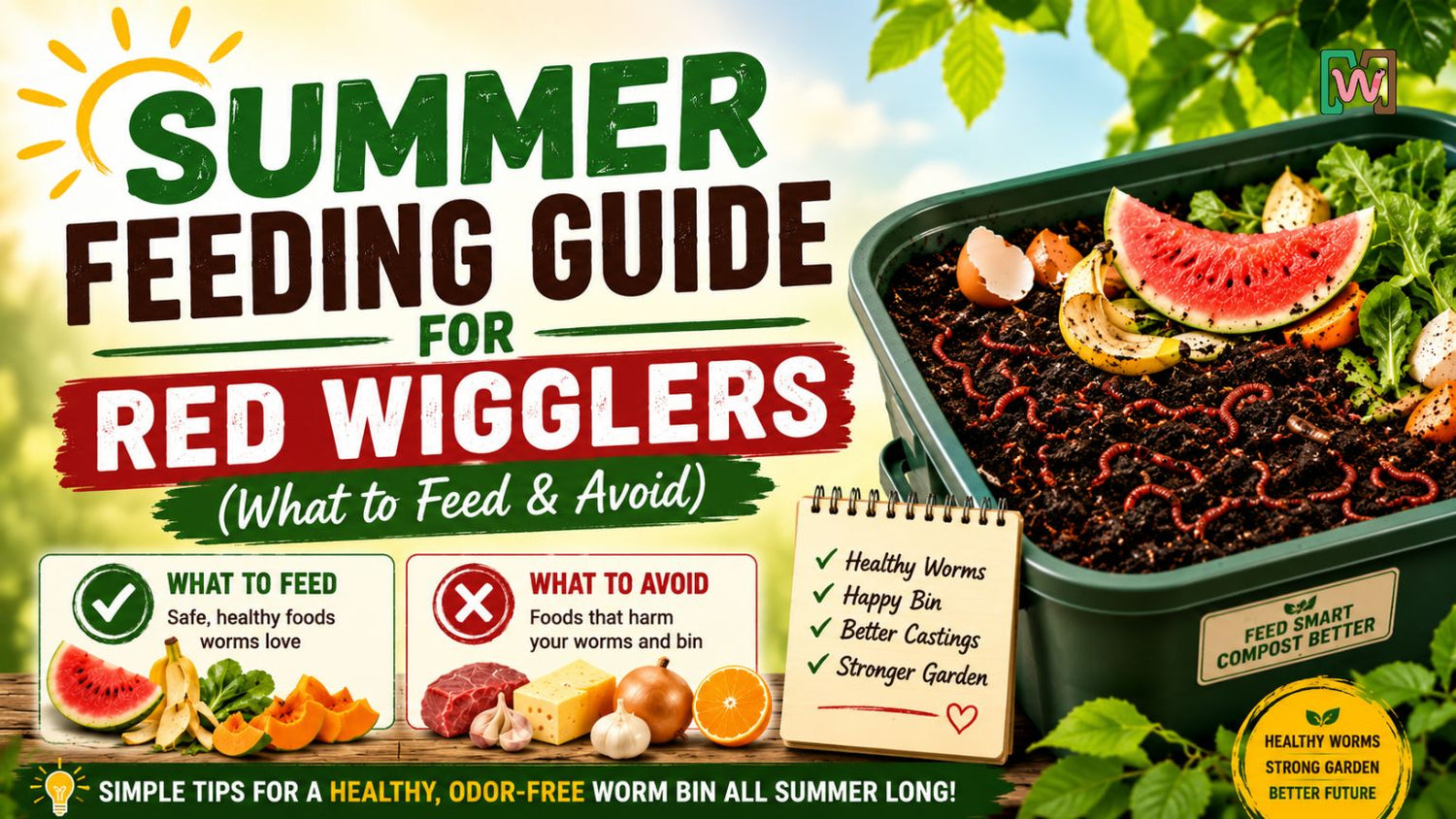
Hi, I’m Samantha Flowers from Memes Worms, and after years of raising red wigglers and managing worm bins, I’ve learned that summer feeding can make a huge difference in worm health and compost quality. When summer arrives, my red wigglers become more active and hungry. Warm weather helps worms break down food faster, but it can also create problems if the worm bin gets too hot or too wet.
I learned this the hard way during my first summer with vermicomposting. I overfed my worms with watermelon scraps, and within days my bin smelled terrible and attracted fruit flies.
Now I follow a simple summer feeding routine that keeps my worms healthy, active, and producing rich worm castings all season long. If you are raising red wigglers during hot weather, this guide will help you understand exactly what to feed, what to avoid, and how to keep your worm bin balanced during summer.
Why Summer Feeding Is Different for Red Wigglers
Red wigglers eat more during warm months because microbial activity increases in the bin. Food scraps break down faster, which gives worms easier access to soft organic matter. But summer heat can also turn a healthy worm bin into a soggy mess if you feed too much watery food.
During summer, I focus on:
- Smaller and more frequent feedings
- More dry bedding materials
- Balanced moisture
- Foods that break down safely
- Avoiding overheating and pests
Red wigglers thrive best when the bedding stays moist like a wrung-out sponge and temperatures remain moderate. Experts recommend maintaining balanced moisture and airflow in worm bins during warm weather.
Best Foods to Feed Red Wigglers in Summer
1. Watermelon Rinds
Watermelon is one of my favorite summer foods for worms. Red wigglers love the soft inside of the rind because it breaks down quickly and contains moisture.
I always chop watermelon rinds into smaller pieces before feeding. This helps prevent overheating inside the bin.
Do not add huge amounts at once because watermelon contains lots of water. Too much can create anaerobic conditions and bad odors.
2. Banana Peels
Banana peels are one of the best foods for red wigglers. The peels soften quickly in warm weather and worms usually gather around them within days.
I like freezing banana peels before feeding because frozen scraps break down faster after thawing.
Many worm composting guides list banana peels among the top foods for red wigglers because they are soft and easy to decompose.
3. Pumpkin and Squash
Soft squash and pumpkin are excellent summer foods for worm bins. They provide moisture without becoming overly acidic.
I often bury small chunks under bedding to prevent fruit flies.
4. Coffee Grounds
Used coffee grounds work great during summer because they help balance wet food scraps. Coffee grounds also improve texture inside the bin.
I only use moderate amounts because too much acidity can stress worms.
Research and composting experts commonly recommend coffee grounds for worm bins when used carefully.
5. Leafy Greens
Lettuce, spinach, cabbage, and other leafy greens are safe choices during summer feeding.
These vegetables break down quickly and provide nitrogen-rich food for microbes that worms feed on.
6. Crushed Eggshells
Eggshells are very important during summer because they help control pH levels in the worm bin.
I always rinse and crush eggshells before adding them. They also provide grit that helps worms digest food properly.
7. Shredded Cardboard and Paper
Even though cardboard is bedding, I treat it like part of the worm diet in summer. Wet foods increase moisture fast, so shredded cardboard helps absorb excess water.
Healthy worm bins need both greens and browns to stay balanced.
Foods to Avoid Feeding Red Wigglers in Summer
Summer heat makes bad foods even more dangerous for a worm bin. Certain scraps rot quickly and create odors, pests, and harmful bacteria.
Meat and Dairy
Never feed meat, cheese, milk, or greasy leftovers to your worms.
These foods decompose slowly, smell terrible, and attract flies and rodents. Most vermicomposting experts strongly recommend avoiding animal products completely.
Citrus Fruits
Small amounts may be okay in large bins, but too much citrus can make the bin acidic.
I avoid lemons, oranges, and limes during summer because heat already increases stress inside the bin.
Onions and Garlic
Red wigglers dislike strong-smelling foods like onions and garlic. These foods can create unpleasant odors and may irritate worms.
Salty or Spicy Foods
Chips, spicy leftovers, sauces, and processed foods should stay out of worm bins.
Salt and spices can harm worms and disturb microbial balance.
Oily Foods
Oil blocks airflow in the bin and creates anaerobic conditions.
I never add fried foods, oily pasta, or greasy scraps to my worm systems.
Too Much Bread or Pasta
Small amounts are okay occasionally, but too much bread can turn sticky and moldy during summer heat.
Must Read : 15 Proven Ways to Keep Red Wigglers Cool & Productive in Summer (2026 Guide)
How Often I Feed My Red Wigglers in Summer
I usually feed my worms once or twice each week during summer.
Instead of following a strict schedule, I check the bin first. If old food is still visible, I wait before adding more.
Overfeeding is one of the biggest mistakes in worm composting. Uneaten food creates heat and bad smells.
Experienced vermicomposters often recommend feeding based on how quickly worms process scraps instead of feeding on fixed dates.
My Summer Feeding Routine
Here is the simple feeding routine I use during hot weather:
- Check moisture levels
- Remove large uneaten scraps
- Add dry bedding first
- Bury food under bedding
- Rotate feeding spots
- Keep the lid ventilated
This routine keeps my worm bin balanced even during very hot weeks.
How to Prevent Fruit Flies in Summer
Fruit flies become more active during summer, especially around sweet fruits.
To stop fruit flies, I:
- Freeze scraps before feeding
- Bury food deep under bedding
- Add dry cardboard on top
- Avoid overfeeding fruit
Many worm composters also recommend freezing scraps because it speeds decomposition and helps control pests.
Signs Your Worms Are Happy
Healthy red wigglers are easy to spot during summer.
Here are signs your worm bin is doing well:
- Earthy smell
- Active worms near food
- Moist but not soggy bedding
- No strong odors
- Lots of worm castings
- Tiny worm cocoons appearing
If the bin smells rotten, feels too wet, or attracts flies, feeding adjustments are needed.
Must Read : Red Wigglers for Sale: What to Know Before You Buy Composting Worms
Signs You Are Overfeeding
I used to think more food meant happier worms. That is not true.
These signs usually mean overfeeding:
- Sour or rotten smell
- Slimy food buildup
- White mold everywhere
- Worms trying to escape
- Excess liquid at the bottom
When this happens, I stop feeding for several days and add shredded cardboard.
Best Summer Bedding for Red Wigglers
Good bedding matters just as much as food during summer.
I use:
- Shredded cardboard
- Coconut coir
- Newspaper
- Dry leaves
These materials help absorb moisture and improve airflow.
Experts recommend bedding that holds moisture while still allowing air circulation.
Helpful Products for Summer Worm Care
If you want to make summer worm feeding easier, these products work well for beginners and experienced composters:
- Red wiggler composting worms
- Coconut coir bedding
- Worm feeding trays
- Moisture meter
- Worm castings separator
- Shredded cardboard bedding
- Ventilated worm bins
Note - You can also promote products like live red wigglers, worm castings, worm chow, and beginner worm composting kits from Memes Worms within the blog naturally.
Summer Feeding Tips I Always Follow
After years of worm composting, these simple habits make the biggest difference for me during summer:
- Feed smaller amounts more often
- Balance wet scraps with dry bedding
- Keep bins out of direct sunlight
- Freeze scraps before feeding
- Avoid acidic and oily foods
- Watch moisture carefully
Healthy red wigglers can process large amounts of organic waste, but balance is everything during hot weather.
Must Read : Truth About “Pure Red Wigglers”: Why I Changed How I Talk About My Worms
Final Thoughts
Summer can be the best season for vermicomposting if you feed your red wigglers properly. Warm temperatures help worms stay active, but too much wet food or heat can quickly create problems.
I keep things simple by feeding soft fruits and vegetables in moderation, balancing moisture with cardboard, and avoiding harmful foods completely.
Once you learn what your worms like and how your bin reacts, summer feeding becomes easy and rewarding. Healthy red wigglers will turn kitchen scraps into rich worm castings that help gardens grow stronger all season long.




Dejar un comentario
Todos los comentarios se revisan antes de su publicación.
Este sitio está protegido por hCaptcha y se aplican la Política de privacidad de hCaptcha y los Términos del servicio.