



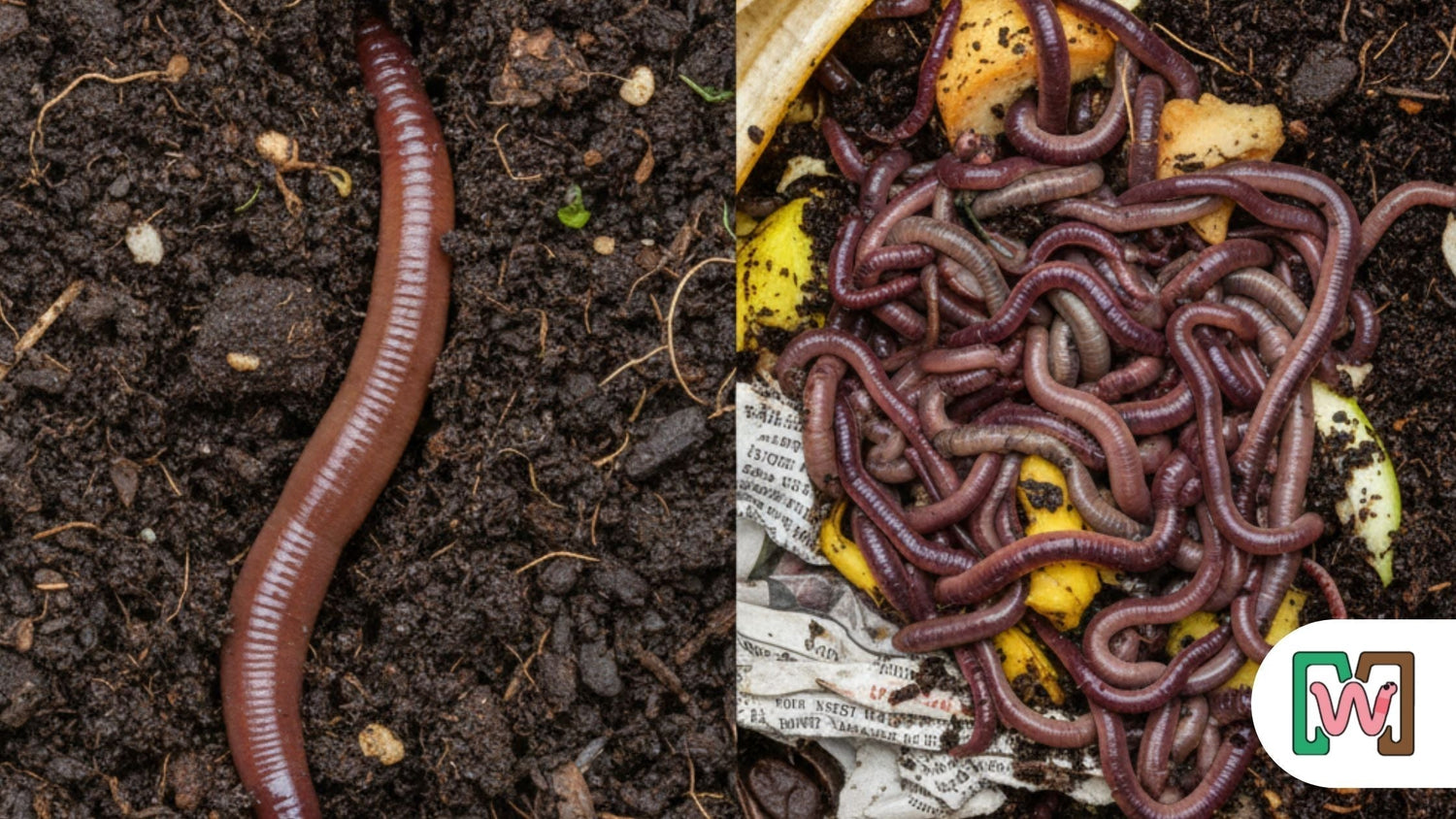
Earthworms live deep in soil and do not thrive in compost bins. Compost worms live near the surface and eat food scraps, making them the correct choice for vermicomposting.
This is one of the most common questions I get as a worm farmer. Many people think all worms are the same — but they’re not. Using the wrong type of worm can lead to slow composting, escaping worms, and a failed bin.
If you’re trying to decide which worms actually work, this guide will help you choose with confidence.
If you’re looking for the best composting worms, start with worms that are designed to live in a bin and process food scraps efficiently.
Compost Worms vs Earthworms
-
Earthworms = soil health
-
Compost worms = food scrap composting
-
Compost worms are the correct choice for worm bins
This simple difference explains why one works in a compost bin — and the other doesn’t.
Must Read : The Ultimate Guide to Compost Worms for Sale and Their Role in Sustainable Living
Compost Worms vs Earthworms
Earthworms
-
Live deep in soil
-
Feed on soil and already-decayed material
-
Prefer cool, stable ground
-
Do not perform well in compost bins
Compost Worms
-
Live near the surface
-
Feed on food scraps and microbes
-
Thrive in moist bedding
-
Ideal for worm bins and vermicomposting
If your goal is to compost kitchen scraps, compost worms are the clear winner.
What Are Ground Worms?
“Ground worms” is not a scientific term. It’s a common name people use to describe earthworms found in the ground, especially the large worms seen after rain or while digging in a yard or garden.
Ground worms:
-
Live deep in soil
-
Burrow and create tunnels
-
Help improve soil structure
-
Are often used for fishing bait
Ground worms are earthworms, not compost worms.
This is where many beginners get confused. Ground worms do important work in soil, but they are not built for compost bins. When placed in a shallow bin with food scraps, they often struggle or crawl out trying to escape.
Common Types of Ground Worms
When people ask about types of ground worms, they are usually referring to these soil-dwelling earthworms:
-
Nightcrawlers – Large worms that live deep underground and often surface after rain
-
Garden earthworms – Smaller worms commonly found in lawns and garden beds
-
Field worms – Earthworms found in fields, pastures, and natural soil areas
All of these are earthworms, not compost worms.
They help loosen soil and improve drainage, but they do not thrive in worm bins
What Are Earthworms?
Earthworms are soil-dwelling worms that improve garden soil. They create tunnels, move nutrients, and support plant growth underground.
They are excellent for soil health — but they are not built for compost bins.
Earthworms need:
-
Deep soil
-
Stable temperatures
-
Underground conditions
When placed in a shallow bin with food scraps, they often struggle or try to escape.

What Are Compost Worms?
Compost worms are surface-dwelling worms that live in decaying organic matter. They are commonly used in worm bins to break down food scraps and create worm castings.
Compost worms:
-
Live in shallow bedding
-
Feed on microbes that break down food
-
Handle moisture and surface conditions well
-
Reproduce quickly in the right setup
These traits make compost worms ideal for vermicomposting systems.
Why Earthworms Don’t Work in Compost Bins
This is one of the biggest mistakes I see beginners make.
Earthworms struggle in bins because:
-
They want to burrow deep, but bins are shallow
-
They prefer soil, not fresh food scraps
-
They need cooler, more stable environments
-
They often crawl out trying to escape
Earthworms aren’t bad worms — they’re just the wrong worms for composting.
Why Compost Worms Thrive in Worm Bins
Compost worms are built for bin life.
They thrive because:
-
They live where food scraps break down
-
They eat microbes instead of raw waste
-
They tolerate moisture and surface living
-
They multiply quickly when conditions are right
This is exactly how worm composting works when the right worms are used.
Compost Worms vs Earthworms — Which Should You Choose?
Here’s the simple decision:
-
Want to compost food scraps? → Compost worms
-
Want healthier garden soil? → Earthworms
-
Using a worm bin indoors or outdoors? → Compost worms
If you’re building a worm bin, compost worms are the correct and reliable choice.
Must Read : Red Wigglers vs Earthworms: The Composter's Guide
Final Takeaway
Not all worms are compost worms.
Earthworms belong in the ground.
Compost worms belong in compost bins.
Choosing the right worm from the start saves time, prevents failed bins, and makes composting easier and more successful.




1 comment
Naresh
Earthworms
Leave a comment
All comments are moderated before being published.
This site is protected by hCaptcha and the hCaptcha Privacy Policy and Terms of Service apply.