



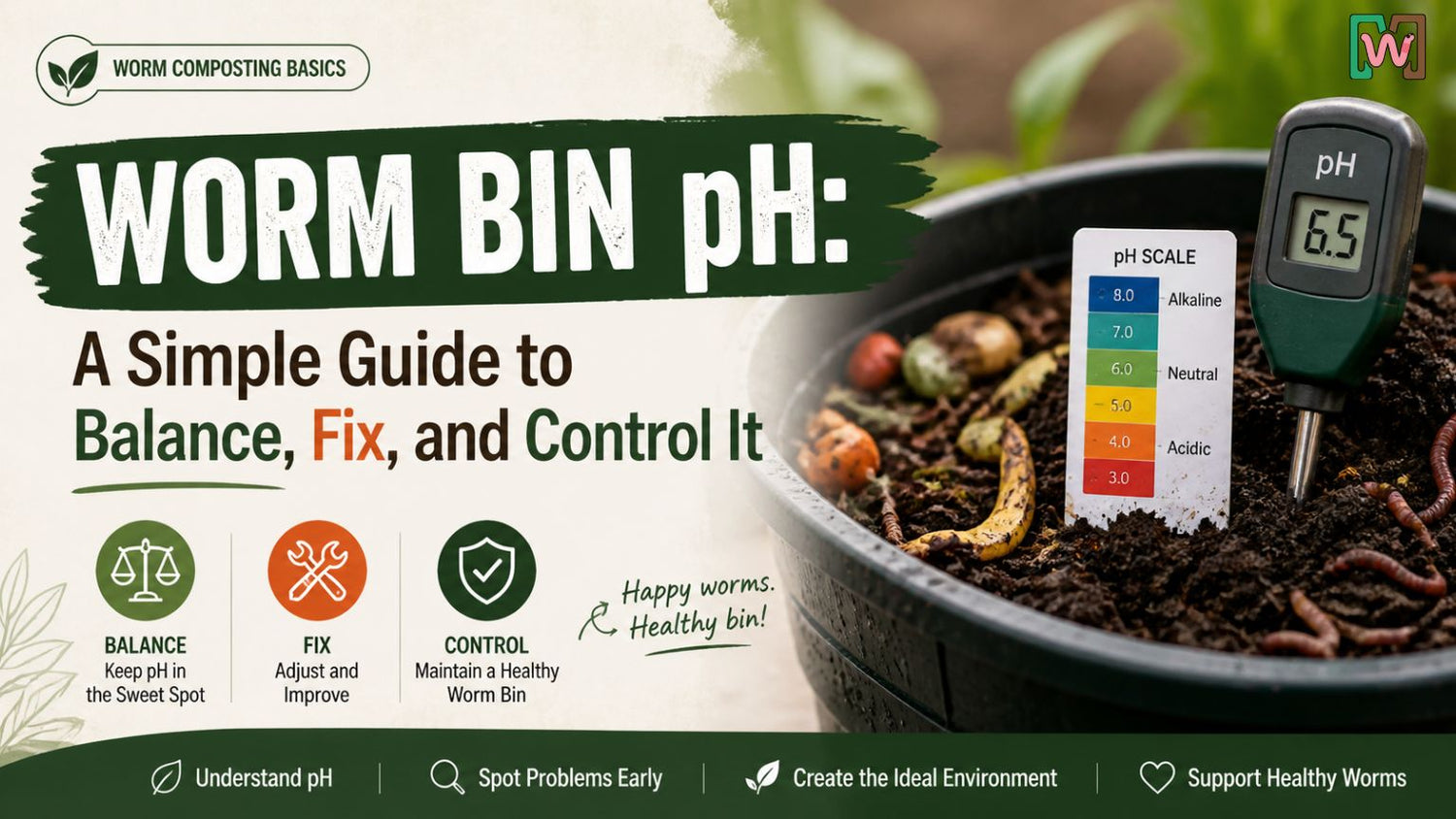
When I first started composting, I did not think much about worm bin pH. I focused on food, worms, and bedding. Then one day, my worms slowed down. Some tried to escape. The bin smelled off.
That is when I learned something important.
If your worm bin pH is not balanced, everything else stops working.
In this guide, I will show you what pH means, why it matters, how to fix it, and how to keep your worm bin stable. I will keep this simple, clear, and backed by real science and trusted sources.
What Is Worm Bin pH?
pH is a scale that tells you how acidic or alkaline something is.
Low pH = acidic High pH = alkaline Neutral = balanced
For a worm bin pH, balance is everything.
Worms breathe through their skin. If the environment becomes too acidic or too alkaline, they get stressed or die.
Ideal pH for Compost Bins
The best range for a worm bin pH is:
6.0 to 7.5
This is slightly neutral to slightly acidic.
According to the United States Environmental Protection Agency, compost systems work best when pH stays near neutral because microbial activity stays balanced.
Worms and microbes both depend on this balance.
If you are just getting started and want everything set up correctly from day one, our Worm Bin Starter Kit includes a Bus Pan bin, VermiFusion bedding, Oyster Shell Flour, Microbial Food, Worm Chow, a Worm Blanket, and 1 lb of Pure Red Wigglers — everything pre-selected to help your bin stay in the right pH range from the start.
Why Worm Bin pH Matters So Much
A balanced worm bin pH supports:
- Healthy worms
- Fast composting
- Good bacteria growth
If pH goes wrong, you may see:
- Worms trying to escape
- Bad smells
- Slow decomposition
I always check pH when something feels off.
Signs Your Worm Bin pH Is Too Low (Acidic)
Acidic bins are common.
Watch for:
- Sour smell
- Worms climbing walls
- Fruit flies
- Mushy food
This usually happens from too much wet food.
Signs Your Worm Bin pH Is Too High (Alkaline)
High pH is less common, and it still happens.
Watch for:
- Strong ammonia smell
- Dry bedding
- Slower worm activity
Balance is key on both sides.
How to Test Worm Bin pH
The best way to check worm bin pH is simple.
You can use:
- pH strips
- A pH meter for worm bin
- Soil testing kits
I prefer test strips. It gives more accurate results.
Testing once a week is enough.
Our Worm Bin Starter Kit includes a thermometer to help you track bin conditions alongside pH. Keeping an eye on both temperature and acidity helps you catch problems early.
How to Lower pH in Worm Bin
If your bin is too alkaline, you need to lower pH.
Here is how I do it.
Add Carbon Materials
Add:
- Shredded cardboard
- Paper
This helps balance the system.
Add Acidic Food in Small Amounts
Use:
- Coffee grounds
- Small fruit scraps
- Do not overdo it.
Use Coconut Coir
Coconut coir for pH worm bins is one of the best materials.
It:
- Balances moisture
- Keeps pH stable
I use coir when my bin feels off. Our Coco-coir alongside shredded cardboard, coffee grounds, and a signature worm food blend. It takes the guesswork out of getting your bedding right, and it is one of the easiest ways to maintain stable worm bin pH without doing everything from scratch.
Reduce Overfeeding
Too much food creates an imbalance.
Feed less until things stabilize.
How to Raise pH in Worm Bin
If your bin is too acidic, you need to raise pH.
Add Crushed Eggshells.
Eggshells:
- Add calcium
- Neutralize acidity
- Crush them into powder for best results.
Add Oyster Shell Flour (Better Than Eggshells)
This is my go-to method
For faster and more reliable results, our Oyster Shell Flour works better than crushed eggshells. While eggshells provide some calcium, they take much longer to break down. Oyster Shell Flour is finely ground into powder, which means worms can use it immediately for digestion and pH balance.
It also supports worm health beyond pH. The gritty texture helps worms grind food in their gizzards, which speeds up composting and leads to higher-quality worm castings. A light sprinkling of about 1 tablespoon per 2 lbs of worms, once every 1 to 2 weeks, is enough to keep your bin balanced.
Add Agricultural Lime (Not Quick Lime)
Use small amounts only.
This gently raises pH.
Add Dry Bedding
Dry materials:
- Absorb excess moisture
- Reduce acidity
This helps restore balance.
What to Put in Worm Bin to Lower pH
If you want to adjust gradually, use:
- Coconut coir
- Paper bedding
- Balanced feeding
Avoid strong chemical changes.
Slow changes are safer for worms.
Meme's VermiFusion Bedding is pre-mixed to provide exactly this kind of gradual, gentle environment — ideal moisture retention, good airflow, and a balanced starting pH that lets worms settle in and thrive.
Coconut Coir for pH Worm Bins
Use coconut coir often.
It is one of the best materials for worm bin pH control.
Why it works:
- Neutral pH
- Holds moisture well
- Improves airflow
It creates a stable environment. When setting up the I suggest Worm Factory 360, coconut coir is actually one of the recommended bedding materials to line the bin before adding worms. Whether you compost in-ground or indoors, coir is a reliable anchor for stable pH.
How Often Should You Check Worm Bin pH?
I check:
- Once a week normally
- More often in summer
If your system is stable, you do not need to check daily.
Watch your worms. They tell you a lot. A comfortable worm stays buried and active. A stressed worm climbs, clumps near the surface, or tries to escape. That is your first warning sign before you even pick up a pH strip.
Does Aluminum Affect the pH of Compost Bins?
This is a common question.
Aluminum can react in acidic conditions.
It may:
- Leach into compost
- Affect microbial activity
That is why most worm bins avoid metal.
Does Metal Affect the pH of Compost Bins?
Yes, some metals can affect compost conditions.
Rust and reactions can change:
- Moisture
- Microbial balance
- pH levels
Plastic or wood bins are safer. Meme's Bus Tub Worm Bins are made from durable, high-quality plastic — no metal, no rust, no pH interference. The set of 5 stackable tubs gives you plenty of room to expand your system while keeping conditions clean and consistent.
For a more advanced system, the Worm Factory 360 is built from post-consumer recycled plastic and is designed for odor-free, pH-stable composting indoors or out — a great long-term bin choice.
Common Mistakes with Worm Bin pH
I see these mistakes often.
✗ Overfeeding fruit scraps
✗ Ignoring moisture levels
✗ Not adding bedding
✗ Sudden pH changes
Fixing these early prevents bigger problems. Sprinkling Oyster Shell Flour regularly and refreshing bedding with VermiFusion every few weeks handles most of these mistakes before they escalate.
How to Keep Worm Bin pH Stable
Here is what I do every week:
- Feed Worm Chow
- Add bedding regularly
- Keep moisture even
- Check smell and texture
Consistency keeps pH stable.
My simple weekly routine looks like this: I feed a small amount of worm chow, add a fresh handful of VermiFusion Bedding, sprinkle a small amount of Oyster Shell Flour over the bin, replace the Worm Blanket, and check how the bin smells and feels. That is it. Simple, steady, and effective.
Why Microbes Control Worm Bin pH
Worm bins are not just worms.
They are full of microbes.
According to the Cornell Waste Management Institute, microbes break down organic matter and influence pH levels.
Healthy microbes = stable pH.
This is why the Starter Kit includes Microbial Food — it feeds the beneficial bacteria in your bin, keeping decomposition active and pH from swinging in either direction. A thriving microbial community is one of the best long-term stabilizers you have.
Final Thoughts
If you understand worm bin pH, you understand your whole system.
I always focus on balance.
Not perfect numbers. Not constant testing. Just steady care.
When pH is right, worms thrive.
If you want a simple way to start with the right supplies already chosen for you, check out the Worm Bin Starter Kit. And if your bin is running acidic, keep a bag of Oyster Shell Flour on hand — it is the fastest, most worm-friendly way to bring pH back into balance.




Leave a comment
All comments are moderated before being published.
This site is protected by hCaptcha and the hCaptcha Privacy Policy and Terms of Service apply.