



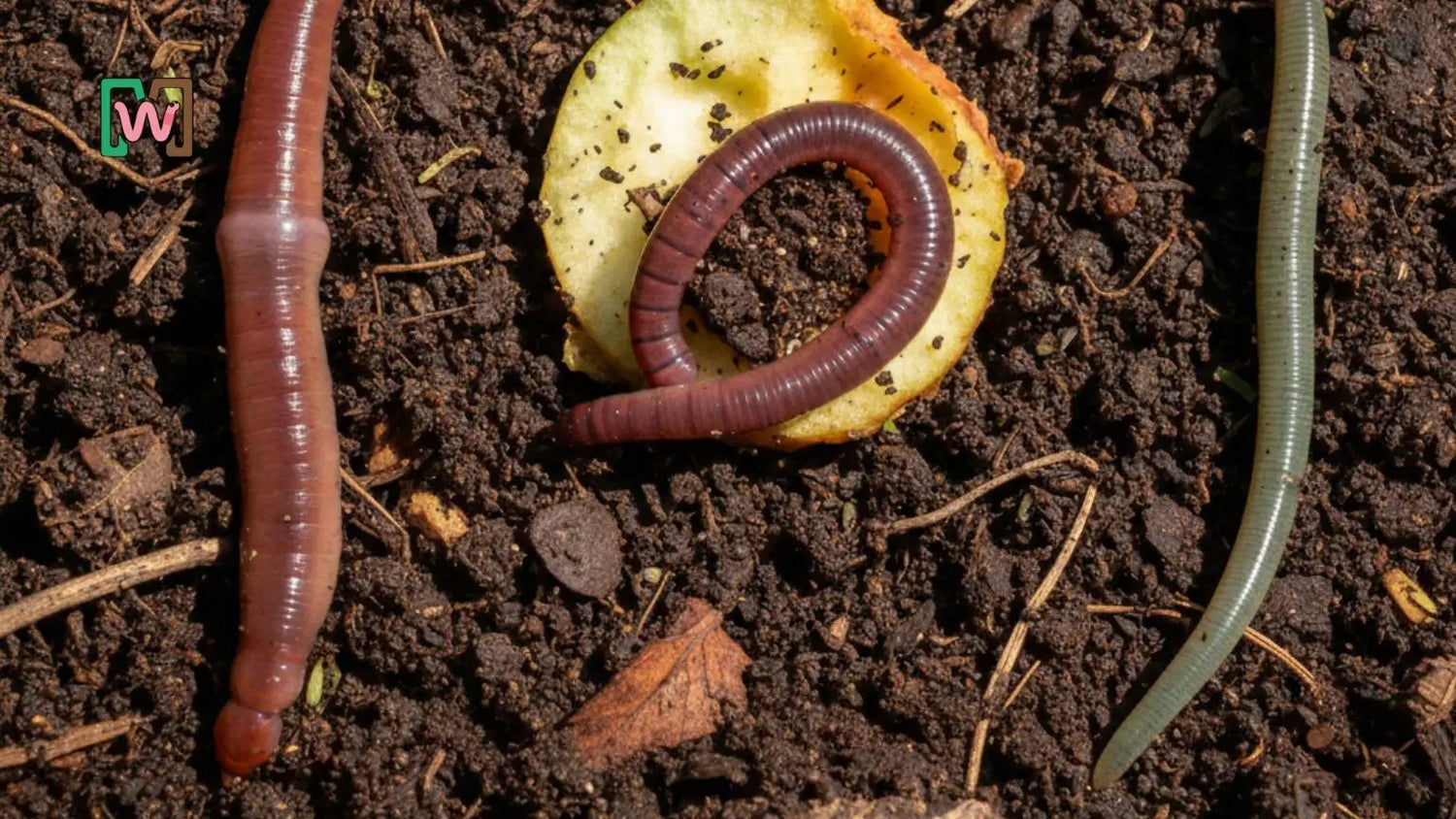
I get asked about soil worms all the time. People dig into their garden or open a pot and see worms they do not recognize. Some look white. Some are small. Some are big and pink. And the first thought is often, “Is this good or bad?”
In this guide, I will explain the types of soil worms, how to spot the differences, and which worms help your soil the most. I will keep this clear, simple, and easy to follow.
Quick Summary
- Most soil worms fall into three main groups: Epigeic (surface dwellers), Endogeic (topsoil dwellers), and Anecic (deep burrowers).
- Red Wigglers are composting worms that thrive in compost bins and mulch but are not suited for living deep in garden soil.
- Nightcrawlers create deep tunnels that improve soil aeration, drainage, and nutrient movement.
- White worms found in soil are usually pot worms or immature earthworms and are generally harmless.
- Healthy worm activity is a sign of biologically active, nutrient-rich soil that supports strong plant growth.
Why Soil Worms Matter
Worms are part of healthy soil. They break down dead plants, move nutrients, and help air and water reach plant roots.
When I see worms in soil, I usually see a system that is alive and working.
That said, not every worm you find plays the same role.
The 3 Types of Earthworms
Most soil worms fall into three main groups. These groups are based on how and where the worms live.
1. Epigeic Earthworms
Epigeic earthworms live on the soil surface. They eat decaying leaves and food scraps.
Key traits:
- Small and thin
- Red or reddish-brown
- Live in compost and mulch
These worms are common in compost bins. They are not deep diggers, and they do not live long in plain garden soil.
Examples include red wigglers.
2. Endogeic Earthworms
Endogeic worms live inside the soil itself.
Key traits:
- Pale or light-colored
- Medium size
- Move through topsoil layers
These worms eat soil rich in organic matter. They help mix nutrients and improve soil texture.
3. Anecic Earthworms
Anecic worms are deep burrowers.
Key traits:
- Large and long
- Dark head and lighter tail
- Build deep vertical tunnels
Nightcrawlers are the best-known example. These worms pull leaves down into the soil and create channels for air and water.
Types of Worms in Garden Soil
Most garden soil has a mix of endogeic and anecic worms. These are the worms that improve soil structure the most.
If your garden soil has:
- Organic matter
- Moisture
- Mild temperatures
You will likely see healthy worm activity.
This is a good sign.
Must Read : Best Worm Composting Bin: A Simple Guide to Choosing the Right One

Types of White Worms in Soil
White worms often worry people.
Most of the time, these are:
- Pot worms
- Immature earthworms
Pot worms are tiny, white, and thin. They show up in wet soil with lots of organic matter.
They are not harmful to plants. They usually mean the soil is too wet.
Drying the soil slightly often reduces them.
Types of Worms in Potting Soil
Finding worms in potting soil is common, especially in outdoor pots.
Common types include:
- Pot worms
- Small endogeic worms
These worms arrive through compost, garden soil, or outdoor exposure.
They are usually harmless and may help break down organic matter.
Bad Worms in Garden Soil
This is an important topic.
Most worms are helpful. Some organisms get called “bad worms” by mistake.
What people often confuse with worms:
- Grubs
- Maggots
- Larvae
These pests can damage roots and plants.
True earthworms rarely harm healthy plants. If you see plant damage, look closely at what you found.
Must Read : Indoor Worm Composting: A Simple Guide for Composting with Worms Indoors
Different Types of Soil Worms and Their Roles
Here is a simple breakdown:
|
Worm Type |
Where They Live |
What They Do |
|
Epigeic |
Surface |
Break down waste |
|
Endogeic |
Topsoil |
Mix nutrients |
|
Anecic |
Deep soil |
Improve drainage |
Each type plays a role in healthy soil systems.
How to Identify a Type of Worm in the Soil
I use three quick checks.
-
Color – Red often means surface worms. Pale means soil dwellers.
-
Size – Large worms are usually deep burrowers.
-
Location – Surface, soil, or deep tunnels give clues.
These clues help narrow it down fast.
What Type of Worms Live in Enriched Soil?
Enriched soil is rich in organic matter.
This soil attracts:
- Endogeic worms
- Anecic worms
These worms feed on decaying plant material mixed into the soil.
The richer the soil, the more worm activity you will see.
What Type of Soil Do Worms Like?
Worms like soil that is:
- Moist, not soaked
- Rich in organic matter
- Loose and airy
They avoid dry, compacted, or chemical-heavy soil.
When soil improves, worms move in on their own.
Must Read : Worm Anatomy Explained: Complete Guide to All Essential Parts of a Worm
Are All Worms a Good Sign?
Most of the time, yes.
Worms usually mean:
- Healthy microbes
- Good moisture balance
- Active nutrient cycling
Seeing worms tells me the soil system is alive.
Common Mistakes When Seeing Worms
I see these mistakes often.
❌ Killing worms out of fear
❌ Assuming all white worms are bad
❌ Overwatering soil
Most worm “problems” fix themselves when soil conditions improve.
Final Thoughts
Understanding the different types of soil worms helps you work with nature instead of against it. Worms are helpers, not pests, in most cases.
When you know what you are looking at, soil care becomes simpler and less stressful.
What's Next?
If you're interested in creating healthier soil and getting more from your garden, these guides are a great place to continue learning.
👉 Types of Worms for Composting and Why It's Not as Simple as It Sounds
👉 The 3 Main Types of Worms Explained
👉 Best Worm Composting Bin: A Simple Guide to Choosing the Right One
👉 Indoor Worm Composting: A Simple Guide
👉 Worm Anatomy Explained: Complete Guide to All Essential Parts of a Worm





Dejar un comentario
Todos los comentarios se revisan antes de su publicación.
Este sitio está protegido por hCaptcha y se aplican la Política de privacidad de hCaptcha y los Términos del servicio.