



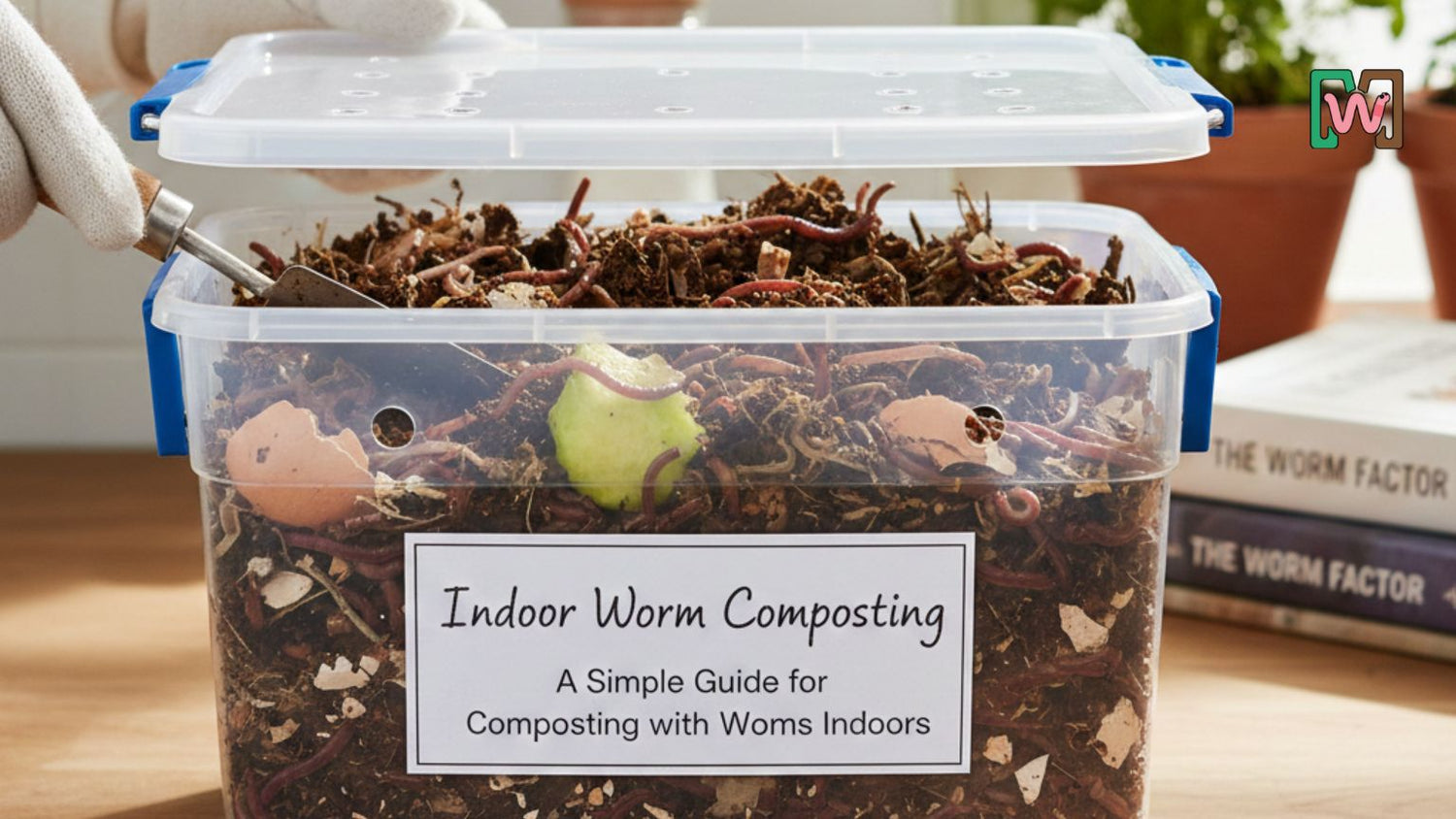
I have helped many people start indoor worm composting, and most of them begin with the same question. Can this really work inside my home? The answer is yes. When it is done right, composting with worms indoors is clean, quiet, and easy to manage.
I am going to explain how indoor worm composting works, what you need, and how to avoid the mistakes that cause smells or flies. I will keep this simple, clear, and practical so you can decide if this method fits your home.
What Is Indoor Worm Composting?
Indoor worm composting uses special worms, called red wigglers, to break down food scraps inside a container. This system is also called vermicomposting.
Instead of sending food waste to the trash, worms turn it into rich compost. This compost is often called worm castings. Castings help plants grow strong and healthy.
Many people choose this method because it works year-round and does not need a yard.
Can You Worm Compost Indoors?
Yes, you can worm compost indoors, and many people do. When the bin is set up correctly, there should be no strong smell. The worms stay inside the bin, and the process stays controlled.
Indoor composting works best when you:
- Use the right worms
- Control moisture
- Feed small amounts at first
This is not messy when done right.
Must Read : How Long Do Worms Live?
Why Composting with Worms Indoors Works So Well
I like indoor worm composting because it solves several problems at once.
Benefits include:
- Less kitchen waste
- No outdoor pile needed
- Fast compost production
- Easy for apartments
This method is also great for people who want to compost without turning piles or hauling bins outside.
Indoor Composting Methods Compared
There are several indoor composting methods, and worm composting is just one of them.
Composting Indoors Without Worms
Some people use bokashi bins or electric composters. These break food down using fermentation or heat. They work, and they often cost more.
Composting with Worms Indoors
Worm composting uses biology instead of machines. It is quiet, low-energy, and low-cost once set up.
I prefer worms because they keep working every day.

Choosing the Best Indoor Worm Composter
The best indoor worm composter depends on space and budget.
Common options:
- Stackable worm bins
- Plastic storage bins
- Large worm composting bin
A good bin has:
- Air holes
- Drainage holes
- A tight lid
You do not need anything fancy to get started.
Must Read : Worm Anatomy Explained: Complete Guide to All Essential Parts of a Worm
Indoor Worm Composting Kit vs DIY Bin
An indoor worm composting kit is a ready-made system. It usually includes trays, bedding, and instructions.
A DIY bin costs less and works just as well.
Choose a kit if you want:
- Fast setup
- Clear instructions
- Neat design
Choose DIY if you want:
- Lower cost
- More control over size
Both methods work.
How to Make an Indoor Compost Bin with Worms
This is the most common place people get stuck. I will break it down step by step.
Step 1: Pick a Container
Use a plastic bin with a lid. Size depends on how much food waste you make.
Step 2: Add Air and Drainage
Drill small holes on the sides and bottom. Place a tray under the bin to catch liquid.
Step 3: Add Bedding
Use shredded cardboard, newspaper, or coconut coir. Bedding should feel like a wrung-out sponge.
Step 4: Add Worms
Use red wigglers, not earthworms. Start with a small amount.
Step 5: Add Food Slowly
Bury food scraps under bedding. Feed small amounts at first.
This is how you make an indoor worm compost bin that works.
Can I Use Worms in My Indoor Composter?
You can use worms indoors as long as the bin is designed for them. Regular compost bins without airflow or drainage will fail.
Worms need:
- Oxygen
- Moist bedding
- Soft food
If these needs are met, worms thrive indoors.
What to Feed Worms in an Indoor Worm Farm
An indoor worm farm works best with simple food.
Good foods:
- Vegetable scraps
- Coffee grounds
- Crushed eggshells
Foods to limit:
- Citrus
- Onion
- Spicy leftovers
Always bury food and avoid overfeeding.
Large Worm Composting Bin Indoors
Some households produce more waste. A large worm composting bin can still work indoors if it is managed well.
Tips for larger bins:
- Add food in sections
- Rotate feeding areas
- Check moisture weekly
Bigger bins need more attention, and they also produce more compost.
Must Read : The Difference Between an Earthworm & Compost Worm
Common Indoor Worm Composting Problems
I see the same issues over and over.
❌ Smells usually mean too much food
❌ Fruit flies mean food is exposed
❌ Worms climbing mean bin is too wet
Fixes are simple:
- Feed less
- Bury food deeper
- Add dry bedding
Indoor worm composting is forgiving if you adjust early.
Is Indoor Worm Composting Worth It?
For most people, yes.
If you want:
- Less trash
- Healthier plants
- A clean indoor system
Then composting with worms indoors is a strong choice.
It is not instant, and it is reliable.





Leave a comment
All comments are moderated before being published.
This site is protected by hCaptcha and the hCaptcha Privacy Policy and Terms of Service apply.