



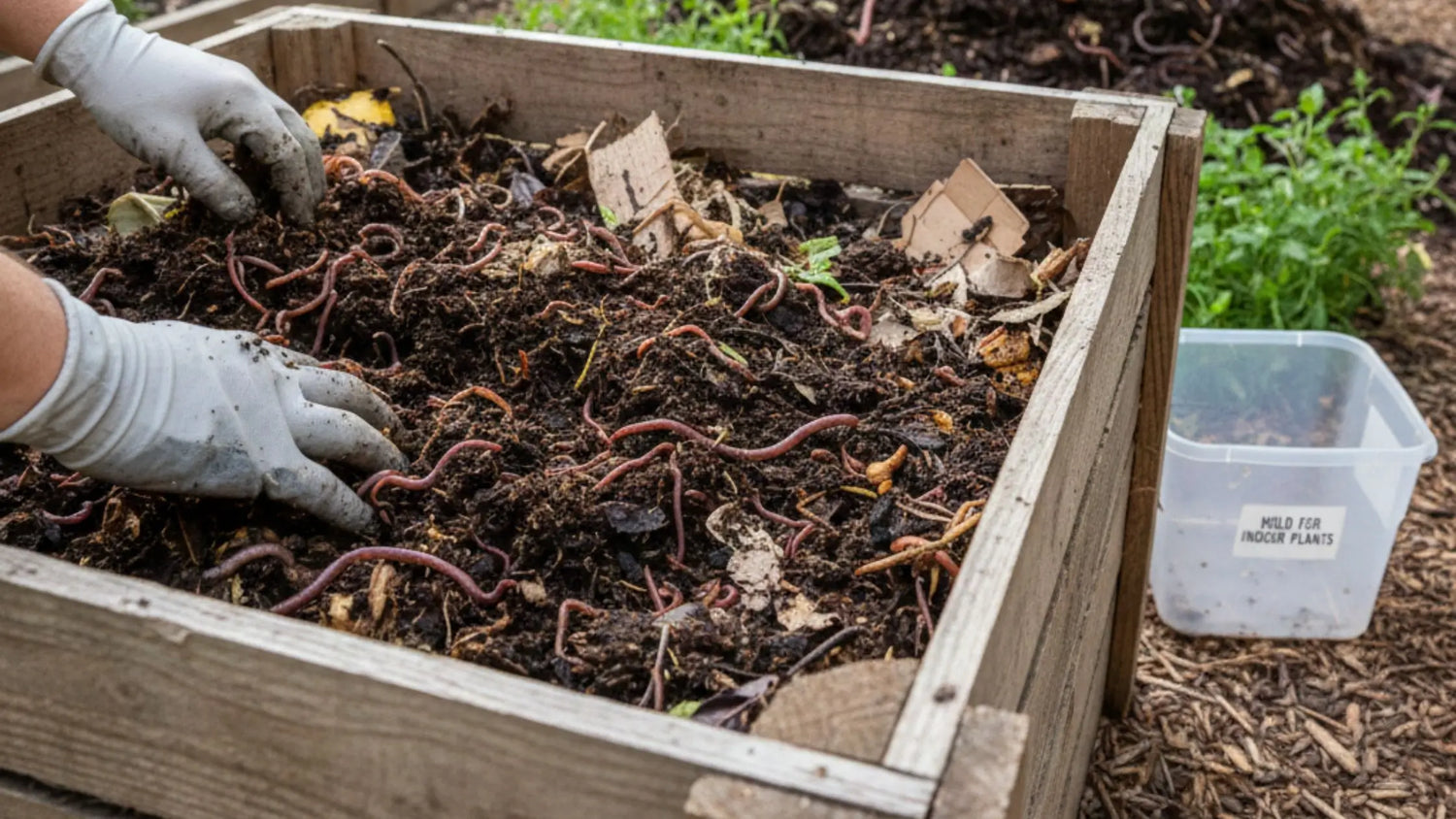
Hi, I’m Samantha—most people call me Meme—founder of Meme’s Worms, a commercial worm farm based in Valdosta, Georgia.
I raise, harvest, and ship European Nightcrawlers every week inside an active commercial worm operation. Everything in this guide is based on real-world experience, not theory.
European Nightcrawlers are strong, active composting worms. They are larger than red wigglers and do best when cared for the right way.
This guide explains how to care for European Nightcrawlers for composting, step by step.
Important Note (Composting Only)
This guide is not about fishing bait.
European Nightcrawlers are often sold as bait, but composting care and bait conditioning are not the same thing. This page focuses only on long-term worm health, composting food scraps, and producing quality worm castings.
Quick Answer: How Do You Care for European Nightcrawlers?
European Nightcrawlers need:
-
Cool, steady temperatures
-
Moist but fluffy bedding
-
Light, controlled feeding
-
Strong airflow
-
A clean, balanced worm bin
When these needs are met, the worms stay healthy and productive.

What Are European Nightcrawlers?
European Nightcrawlers (Eisenia hortensis, sometimes listed as Dendrobaena veneta) are composting worms that live deeper in bedding than red wigglers.
They prefer cooler conditions and are well suited for:
-
Deeper worm bins
-
Larger composting systems
-
Slower, steady composting
They are commonly used for:
-
Composting food scraps
-
Improving soil health
-
Producing high-quality worm castings
Must Read : European Nightcrawlers vs Red Wigglers (comparison guide)
Best Bedding for European Nightcrawlers
Bedding is the foundation of a healthy worm bin. If bedding is wrong, nothing else works right.
Good bedding options include:
-
Shredded cardboard
-
Coconut coir (rinsed first)
-
Aged leaves
-
Finished compost
Bedding tips I use in my own operation:
-
Bedding should feel like a wrung-out sponge
-
Keep bedding loose and airy
-
Always mix bedding before adding worms
- Never pack bedding down
Must Read : Best Bedding for European Nightcrawlers
Feeding European Nightcrawlers (What They Really Eat)
European Nightcrawlers eat slower than red wigglers. Overfeeding is one of the biggest mistakes I see.
Good foods include:
-
Vegetable scraps
-
Plant-based table scraps
-
Melon rinds
-
Squash
-
Small amounts of coffee grounds
-
Soft organic matter
What worms are actually after
Worms don’t eat food scraps directly. They eat the microbes that break that food down. That’s why microbial balance matters more than volume of food.
Microbial support (recommended): Add Microbial Food to feed beneficial microbes—the real food source worms are after.
Must Read : What to Feed European Nightcrawlers (Composting Guide)
Moisture Levels in a European Nightcrawler Bin
Most worm bin problems come from moisture issues.
Correct moisture looks like:
-
Damp, not dripping
-
No standing water
-
Bedding stays fluffy
If your bin smells bad, moisture is almost always the cause.
To fix moisture issues:
-
Add dry bedding
-
Improve airflow
-
Reduce feeding
Must Read : Correct Moisture In Your Worm Bin: All You Need To Know
Ideal Temperature for European Nightcrawlers
European Nightcrawlers prefer cooler temperatures than red wigglers.
They do not like:
-
Temperature swings
-
Heat spikes
-
Hot indoor locations
Best temperature range:
- 55°F–70°F
They slow down when it gets too hot and become stressed by high heat.
✔ Keep temperatures steady
✘ Do not refrigerate worms
Bin Size and Bedding Depth
European Nightcrawlers like deeper bedding.
Bin setup guidelines:
-
At least 10–12 inches deep
-
Strong airflow (vented or no lid)
-
Drainage holes if using plastic bins
They move up and down in the bedding as conditions change.
Breeding European Nightcrawlers
European Nightcrawlers reproduce slower than red wigglers, but healthy bins still grow steadily.
To support breeding:
-
Keep bins cool
-
Avoid overfeeding
-
Do not disturb bedding often
- Maintain stable conditions
Healthy worms breed better than stressed worms.
Grit matters for digestion
European Nightcrawlers need grit to digest food properly.
✔ Oyster shell flour is the preferred grit
It buffers pH and supports digestion better than eggshells or sand.
Common Problems and Simple Fixes
Worms Trying to Escape
Possible causes:
-
Bin too wet
-
Food rotting
-
Temperature too high
Bad Smells
Usually caused by:
-
Overfeeding
-
Excess moisture
-
Poor airflow
Fix problems early to protect your worm population.
Must Read : Worm Bin Troubleshooting Guide
Are European Nightcrawlers Good for Composting?
Yes. European Nightcrawlers are a great choice if:
-
You want larger worms
-
You use deeper bins
-
You compost larger food scraps
They also produce excellent worm castings for gardens and soil building.
European Nightcrawlers for Fishing (Important Note)
European Nightcrawlers are often used as fishing bait, but composting care is different from bait preparation.
Composting care focuses on:
-
Long-term worm health
-
Castings production
-
Stable systems
Fishing bait care involves special conditioning, storage, and handling methods.
Those methods are proprietary and experience-based, so they are not included in this free composting guide.
Proper bait preparation is taught inside our European Nightcrawler Training Program.




1 comment
Brian Davis
Very informative. Thank you. I am interested in purchasing European night crawlers and red wrigglers in approximately 14 days. I just prepared 3 bins, 27-gallons each, with new bedding. 2 bins for EN, and 1 bin for RW. This will be my first attempt, so I’m really excited!!
Leave a comment
All comments are moderated before being published.
This site is protected by hCaptcha and the hCaptcha Privacy Policy and Terms of Service apply.