



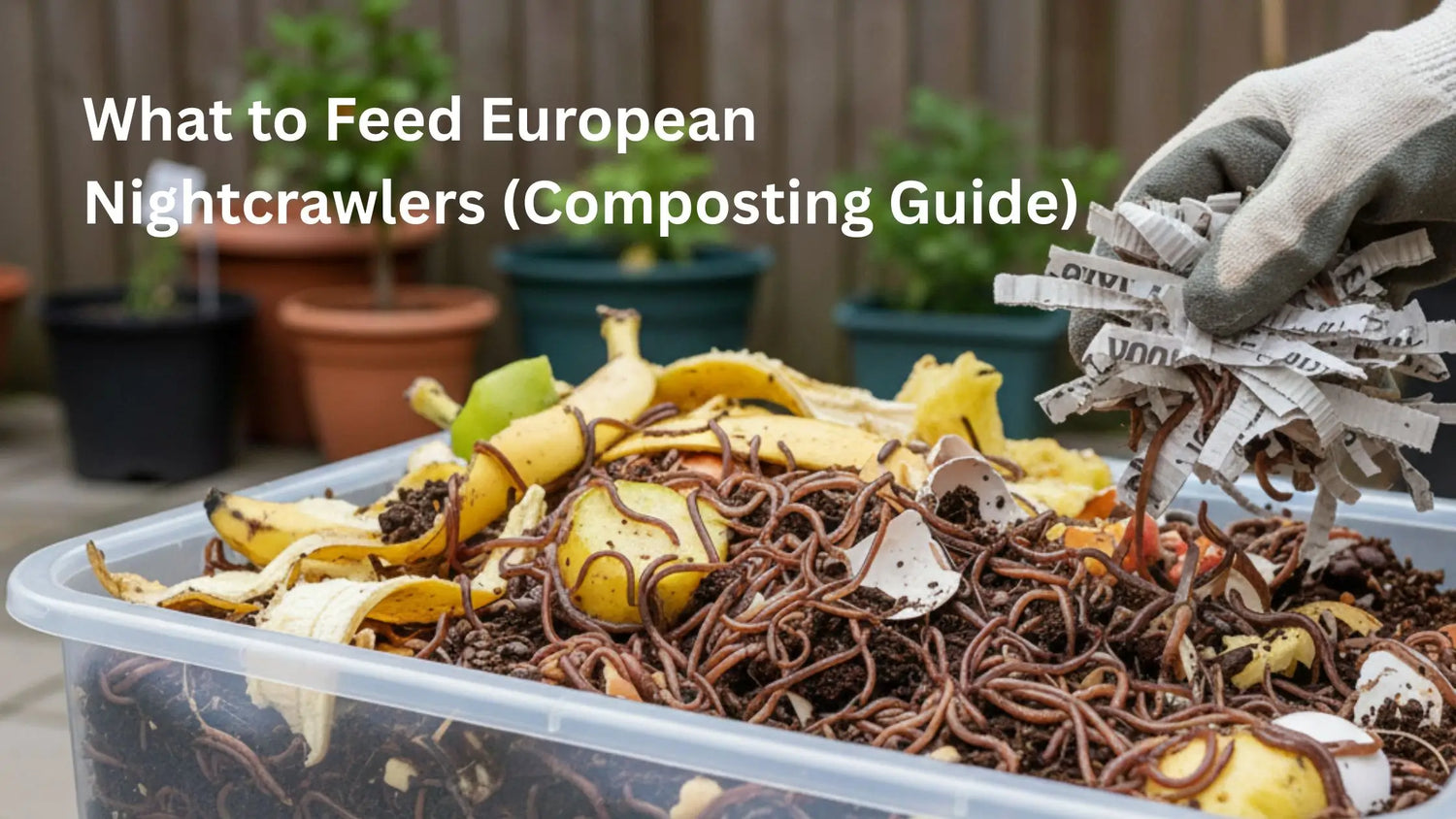
If you’re worried about feeding European nightcrawlers the “right” way, I want to start here:
Most feeding problems aren’t caused by what you feed.
They’re caused by how much and how fast.
I see beginners blame themselves for dead worms when the real issue is simple overfeeding or food going in before the bin is ready.
This guide is focused only on feeding European nightcrawlers as composting worms.
Not bait worms. Not fishing care. Just composting.
If you haven’t already, this feeding guide works best when it’s paired with my main pillar article:
👉 European Nightcrawlers: A Simple Composting Guide
That page explains the setup.
This one explains the food.
The Short Answer (Start Here)
European nightcrawlers eat soft, broken-down organic matter.
What works best:
-
Vegetable scraps
-
Fruit scraps (small amounts)
-
Coffee grounds
-
Pre-composted food
-
Balanced worm feed
They do not eat food the way pets do.
They eat what bacteria and microbes have already started breaking down.
That’s why slower feeding works better.
How European Nightcrawlers Eat (This Changes Everything)
European nightcrawlers don’t chew food.
They rely on:
-
Microbes
-
Moisture
-
Grit
This means fresh food needs time before it becomes usable.
When food goes in faster than it can break down, worms don’t speed up — they get stressed.
Stress looks like:
-
Food sitting untouched
-
Sour smells
-
Worms crawling the sides
That’s not stubborn worms.
That’s the bin saying, “Slow down.”

Best Foods for European Nightcrawlers
These foods break down easily and are gentle on the bin:
-
Leafy greens
-
Melon rinds
-
Squash
-
Pumpkin
-
Banana peels (aged)
-
Coffee grounds (thin layers)
I always bury food under bedding. Food left exposed causes odors and pests long before worms get to it.
Foods I Avoid Feeding
Some foods cause problems even in healthy bins.
I avoid:
-
Meat
-
Dairy
-
Oily foods
-
Salty foods
-
Large chunks of anything
-
Fresh manure
These can cause smells, overheating, and stressed worms — especially in European nightcrawler bins, which prefer cooler, airier conditions.
How Often I Feed European Nightcrawlers
I usually feed every 5–7 days, and only when most of the previous food is gone.
I don’t feed on a schedule.
I feed based on what the bin tells me.
If food is still there after a week, I wait. That pause does more good than adding anything new.
How Much to Feed (The Part Everyone Overdoes)
When in doubt, feed less.
European nightcrawlers do better with:
-
Smaller portions
-
More bedding than food
-
Time between feedings
I’d rather underfeed and adjust than overload the bin and fix problems later.
Always Add Bedding With Food
Every feeding should include fresh bedding.
Why this matters:
-
Controls moisture
-
Reduces odors
-
Improves airflow
-
Prevents compacting
If you haven’t built bedding correctly yet, pause feeding and fix bedding first. Feeding won’t fix a bedding problem.
👉 Best Bedding for European Nightcrawlers
The Role of Grit in Feeding
European nightcrawlers need grit to digest food properly.
I use:
-
Crushed eggshells
-
Oyster shell flour
-
Calcium carbonate
I add grit lightly and consistently. Skipping grit often leads to slow feeding and weak worms, even when food choices are good.
Must Read : European Nightcrawlers vs Red Wigglers: Which Worms are Best for Compost?
Signs You’re Feeding Too Much
These are the most common warning signs I see:
-
Food still present after 7 days
-
Sour or rotten smells
-
Wet or muddy bedding
-
Worms crawling the sides of the bin
If this happens, stop feeding and focus on airflow and bedding. The bin usually balances itself quickly once pressure is removed.

European Nightcrawlers vs Red Wigglers (Feeding Style)
European nightcrawlers:
-
Eat more slowly
-
Prefer aged food
-
Need more bedding per feeding
Red wigglers:
-
Process food faster
-
Handle heavier feeding
-
Tolerate wetter systems
This is why feeding advice for red wigglers doesn’t always work for European nightcrawlers.
What Comes After Feeding
Once feeding feels steady and boring, that’s a good sign.
That’s when:
-
Reproduction stabilizes
-
Worms settle deeper
-
Odors disappear
From there, everything else gets easier.
My Final Feeding Reminder
If you remember one thing from this page, remember this:
European nightcrawlers don’t need more food.
They need more patience.
Slow feeding builds strong bins.
A Quick Note Before You Go
This guide is only for composting with European nightcrawlers.
Fishing bait care uses a different setup and feeding routine.
If you’re working through the full system, this page pairs with:
- European Nightcrawlers: A Simple Composting Guide (pillar)
- Best Bedding for European Nightcrawlers
-
European Nightcrawlers vs Red Wigglers



Leave a comment
All comments are moderated before being published.
This site is protected by hCaptcha and the hCaptcha Privacy Policy and Terms of Service apply.