



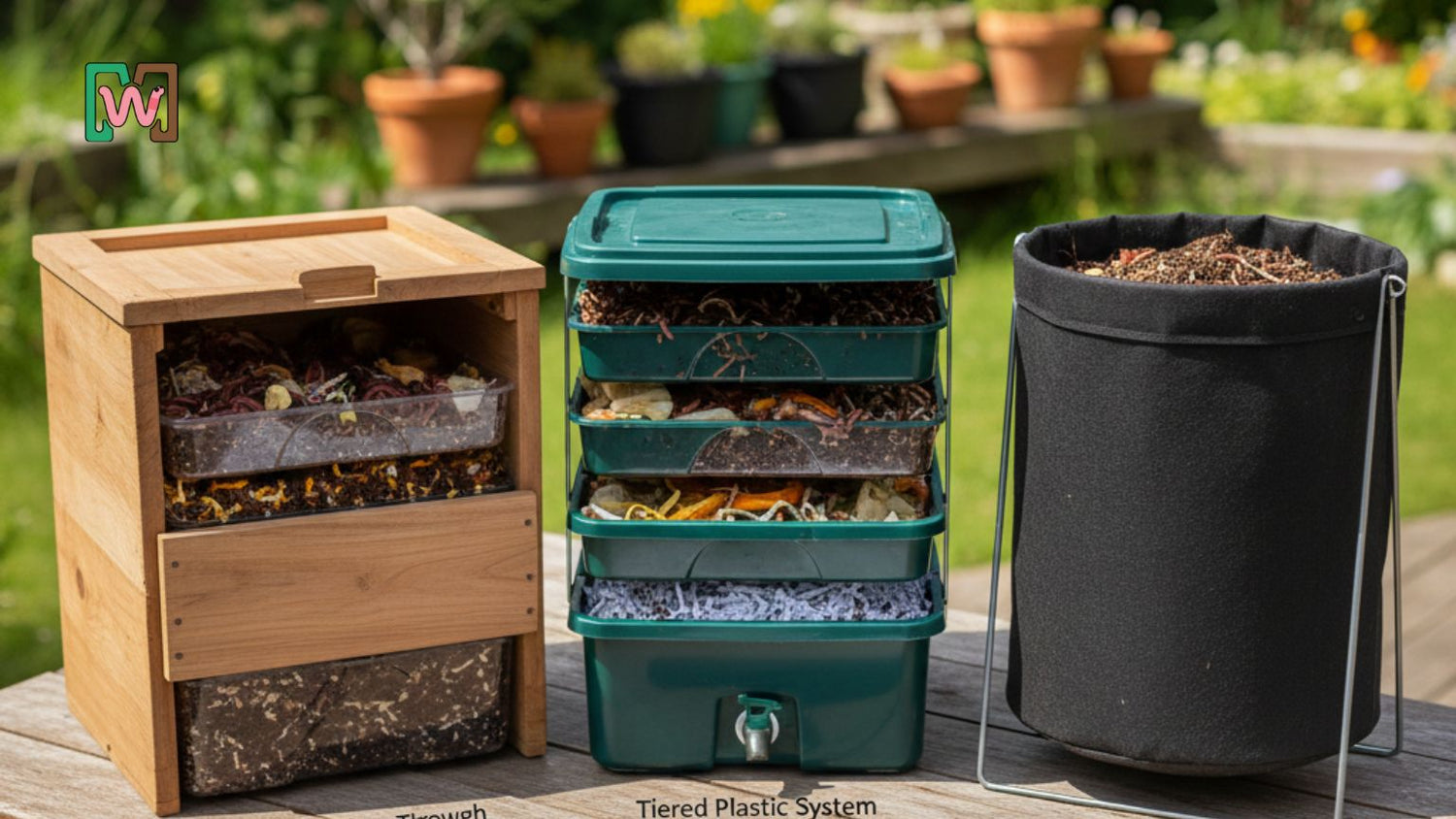
I have tested many systems over the years, and choosing the best worm composting bin always comes down to clarity. People get stuck because there are too many options and not enough straight answers. I am going to walk you through the main types of worm bins, what works best indoors and outdoors, and how to decide what fits your life.
I will keep this simple. Short steps. Clear reasons. No hype.
What Is a Worm Composting Bin?
A worm composting bin is a container made to hold worms, bedding, and food scraps. The worms break food down into castings. Those castings help plants grow better.
Worm bins are different from regular compost bins. They are smaller, more controlled, and designed for worms instead of heat.
Compost Bin vs Worm Bin
This is where many people get confused.
A compost bin uses heat and microbes. A worm bin uses worms and microbes.
Here is the simple difference:
|
Compost Bin |
Worm Bin |
|
Works best outdoors |
Works indoors or outdoors |
|
Needs turning |
No turning |
|
Slower for food scraps |
Faster for food scraps |
|
Handles yard waste |
Handles kitchen scraps |
If your goal is kitchen waste, a worm bin usually wins.
What Type of Bin Is Best for Vermicomposting?
The best bin for vermicomposting depends on where you will use it and how much food waste you have.
In general, the best bins have:
- Good airflow
- Drainage for extra moisture
- Enough space for worms to spread
Plastic bins are the most common and easiest to manage.

Best Indoor Worm Composting Bin
The best indoor worm composting bin is compact, sealed, and easy to check.
Top features to look for:
- Tight lid
- Stackable trays or shallow depth
- Odor control
Stackable tray systems work well indoors because they separate food and castings over time.
I recommend indoor bins for:
- Apartments
- Small kitchens
- First-time worm composters
Must Read : New to Worm Composting? Start Here (Beginner Guide)
Best Outdoor Worm Compost Bin
Outdoor bins can be bigger and heavier.
The best outdoor worm compost bin usually has:
- Thick plastic walls
- Protection from rain
- Large capacity
Outdoor bins are great if you have:
- A garden
- More food waste
- Space to work
Temperature control matters more outside, especially in hot or cold climates.
Best Worm Farm Bins
Worm farm bins are systems designed for steady compost production.
They are built for:
- Continuous feeding
- Easy harvesting
- Long-term use
Many worm farm bins use gravity or stacking to separate worms from castings. These systems cost more, and they save time.
Hungry Bin Worm Composter
The Hungry Bin worm Composter is a popular outdoor worm farm bin.
Why people like it:
- Large capacity
- Gravity-fed design
- Easy harvesting from the bottom
Things to know:
- It costs more than DIY
- It needs space
- It works best outdoors
This bin is a good fit for households with lots of food scraps.
Best DIY Worm Composting Bin
The best DIY worm composting bin is simple and cheap.
You can make one with:
- A plastic storage tote
- A drill
- Newspaper or cardboard
DIY bins work well if you:
- Want to spend less
- Like simple setups
- Are willing to learn as you go
The worms care more about conditions than looks.
Must Read : The Difference Between an Earthworm & Compost Worm
What Not to Put in a Worm Compost Bin
This part matters more than the bin itself.
Do not add:
❌ Meat
❌ Dairy
❌ Oily food
❌ Salty food
❌ Citrus in large amounts
These cause smells, pests, and slow systems.
Stick with plant scraps and soft foods.

Are Worm Composters Worth It?
Yes, worm composters are worth it for the right person.
They are worth it if you want:
- Less food waste
- Better soil
- A low-effort system
They are not worth it if you:
- Do not want to check the bin
- Overfeed often
- Ignore moisture
Success comes from simple habits, not fancy gear.
Choosing the Best Worm Composting Bin for You
I tell people to ask three questions:
- Indoors or outdoors?
- How much food waste?
- How often will I check it?
Answer those, and the right bin becomes clear.
Clarity beats features every time.





Leave a comment
All comments are moderated before being published.
This site is protected by hCaptcha and the hCaptcha Privacy Policy and Terms of Service apply.