



If you’ve ever lifted a damp handful of compost and seen it wriggle, you already know, worms run the show. They’re the quiet workers behind the best kind of soil. Still, not every worm fits the job.
Some dig deep and vanish. Others stay near the surface, turning scraps into that rich, dark mix gardeners call “black gold.”
The problem is, people lump them all together. Earthworms, compost worms and everything. But that is not the right way to go.
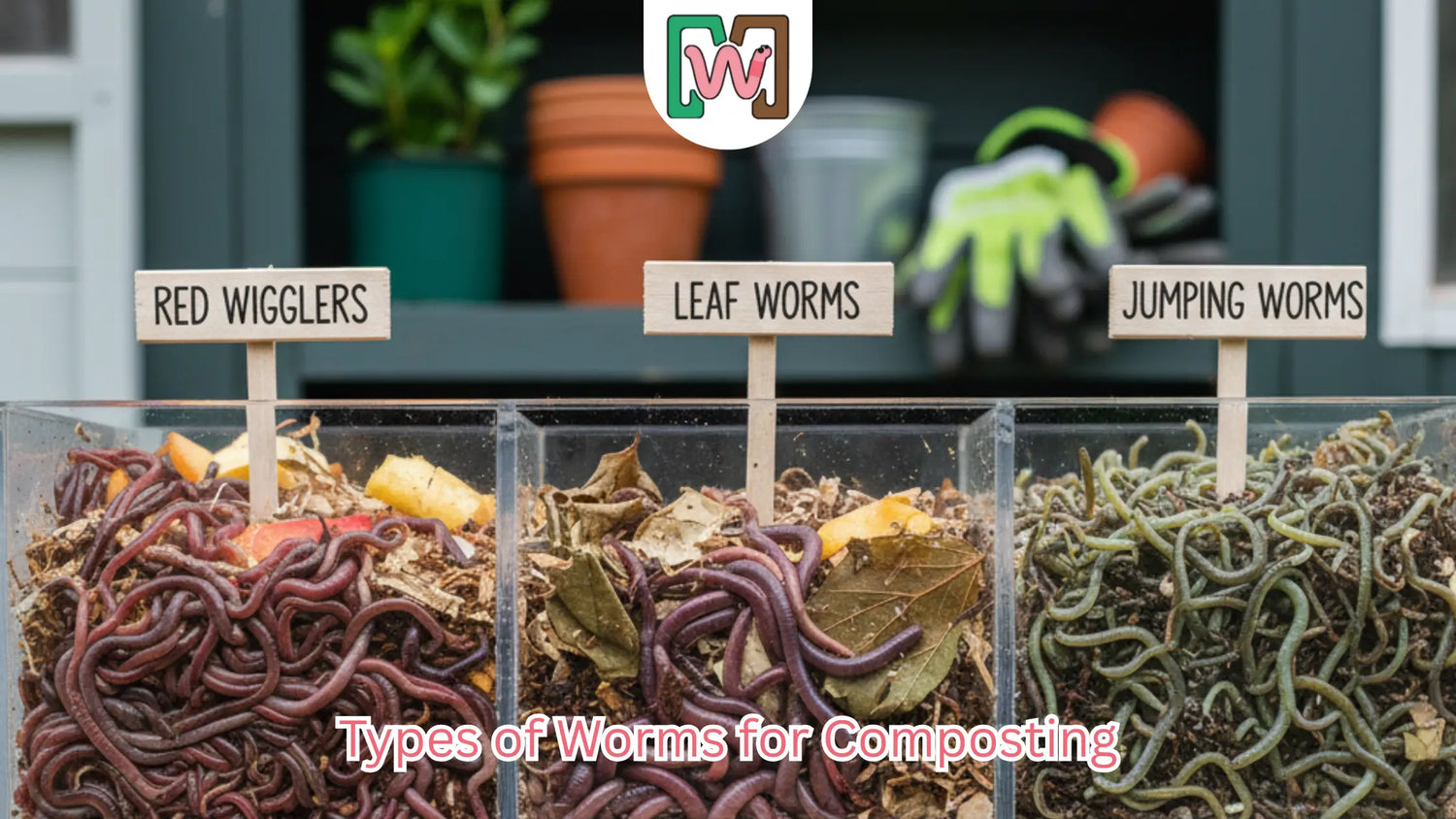
Let’s delve into the types of worms for composting with pictures in this blog.
The Difference Between Compost Worms and Earthworms
Let’s start here because it’s easy to mix them up.
- Compost worms spend their lives close to the surface, tucked into the soft, half-rotten layers where food turns to soil. They like it messy. Warm, airy, a little unpredictable. That’s their comfort zone.
- Earthworms, the ones you dig up in garden beds, are a different story. They keep to the cool tunnels below, slow and steady, far from the chaos above.
- Compost worms though, they’re built for it. They can eat about half their own weight in scraps every single day. Always moving, always chewing. It’s what they do best.
- They reproduce fast and handle temperature changes better. Thus they’re the ones you want as the best worms for vermicomposting.

Red Wigglers: The Little Legends
Everyone talks about them for a reason. Red Wigglers are the rock stars of home composting. Small, reddish, always on the move.
They can turn leftovers into worm castings faster than most species. Some people say they even “learn” your feeding rhythm after a while. Maybe they do.
They tend to live three to five years if treated right, with moist bedding, mild temperature, and a bit of patience. And they’re not picky eaters. Banana peels, coffee grounds, lettuce ends, they’ll go for it all.
If you also fish, that’s a bonus. Along with being the best worms for vermicomposting, Red Wigglers are a lively bait.
Must Read : What Do Worms Eat? A Detailed Guide for What To Feed Your Worms

European Nightcrawlers: The Sturdy Cousins
A little larger, a bit more muscular. They’re what you’d call the blue-collar worms, steady, strong, not as fast but definitely reliable.
- They handle cooler climates better and can dig deeper when it’s too hot up top.
- You might see them sold under different names, ENCs, Belgian worms, or “big reds.” All the same family.
- They live two to four years and do well outdoors or in larger bins.
- Not flashy. Just quietly efficient.

African Nightcrawlers: Tropical Sprinters
Now these types of worms are very speedy. Sleek, purple-blue, almost shiny when the light hits them.
They love heat and humidity and can eat through waste faster than nearly any other worm.
But, they’re fussy about the cold. Anything below fifteen degrees Celsius and they’ll slow, maybe even die off.
If you happen to live somewhere warm, these worms could be your best bet. They like heat, they move fast, and the compost they leave behind, it’s smooth, almost powdery. People say it can make the soil feel lighter, easier to work with.

Indian Blue Worms: The Sensitive Ones
You know how some creatures seem to notice everything? Those types of worms are called the Indian Blue (Perionyx excavatus).
In tropical setups they move like tiny electric currents through the bedding, shredding everything in their path. These types of worms usually live for a year or two.

Alabama Jumpers: The Movers
Many people compare compost worms vs earthworms to understand which are better for home composting. In the battle of compost worms vs earthworms, Alabama Jumpers win, as are very effective and hardworking.
Perfect for loosening up heavy soil or piles that get compacted.
If you add them to an outdoor setup and you’ll notice air pockets forming, drainage improving.
A Word About Lifespan
“How long do earthworms live?” is a burning FAQ! The lifespan of worms depends of some factors.
A regular earthworm might last six or eight years underground. Compost worms, around 2 years. The lifespan of worms depends on their environment and how well they’re cared for.
Their usually lifespan is one to five years. Their reproduction rate is very rapid.
A healthy worm bin has a steady life cycle. Old worms die, new ones appear, castings build up. The whole thing feels alive and super helpful as your compost.
Choosing the Best Worms for Your Setup
There isn’t a single “best” type amongst the types of worms. It depends on where you live, what you feed them, and how much care you can give.
Here are the options for the best worms for composting and fishing:
|
Cooler areas |
|
|
Hot and humid |
Try African or Indian Blues |
|
Indoor composting |
Red Wigglers |
Here are the types of worms for composting with pictures:

How Many Worms You Might Need
There’s a rule: about a pound of worms for every half-pound of daily food waste.
Ideally, it is 500 gms of worms per square foot of land.
You can begin small, five hundred worms, maybe, and see how they handle your scraps. They’ll multiply if conditions are good.
Moreover, there is a common question among gardeners is, How long do earthworms live in different soil conditions? Upto 6 years in natural soil and 1-2 years in urban soil.
Buying Compost Worms
You can find them online, at local worm farms, or even through community compost groups.
If you order online, check that they come with moist bedding and not just dry soil. The transition stresses them out, and half-dead worms won’t help your bin much.
Skip the garden earthworms. They’re not built for the job and usually won’t last.
Must Read : Worm Composting in Cold Weather: How to Keep Your Worms Cozy All Winter
Keeping Them Alive
Worms are very low maintenance, they need moisture, shade, and food that doesn’t rot too fast.
Avoid meat, citrus, or greasy stuff; it smells and attracts pests. Keep the bedding like a wrung-out sponge. Stir gently every week or so.
If you do that, all these types of worms will stay healthy. You’ll start to notice the smell fading, the scraps shrinking, and the bedding turning dark and crumbly. That’s when you know they’re happy.
Quick Glance at Types of Worms for Composting
|
Red Wigglers |
Best all-rounders. |
|
European Nightcrawlers |
Cold-tolerant and hardy. |
|
African Nightcrawlers |
Heat-loving and fast. |
|
Indian Blues |
Sensitive but lightning-quick composters. |
|
Alabama Jumpers |
Great for soil aeration. |
Each has its own rhythm. You’ll get a feel for it after a few months.





Leave a comment
All comments are moderated before being published.
This site is protected by hCaptcha and the hCaptcha Privacy Policy and Terms of Service apply.