



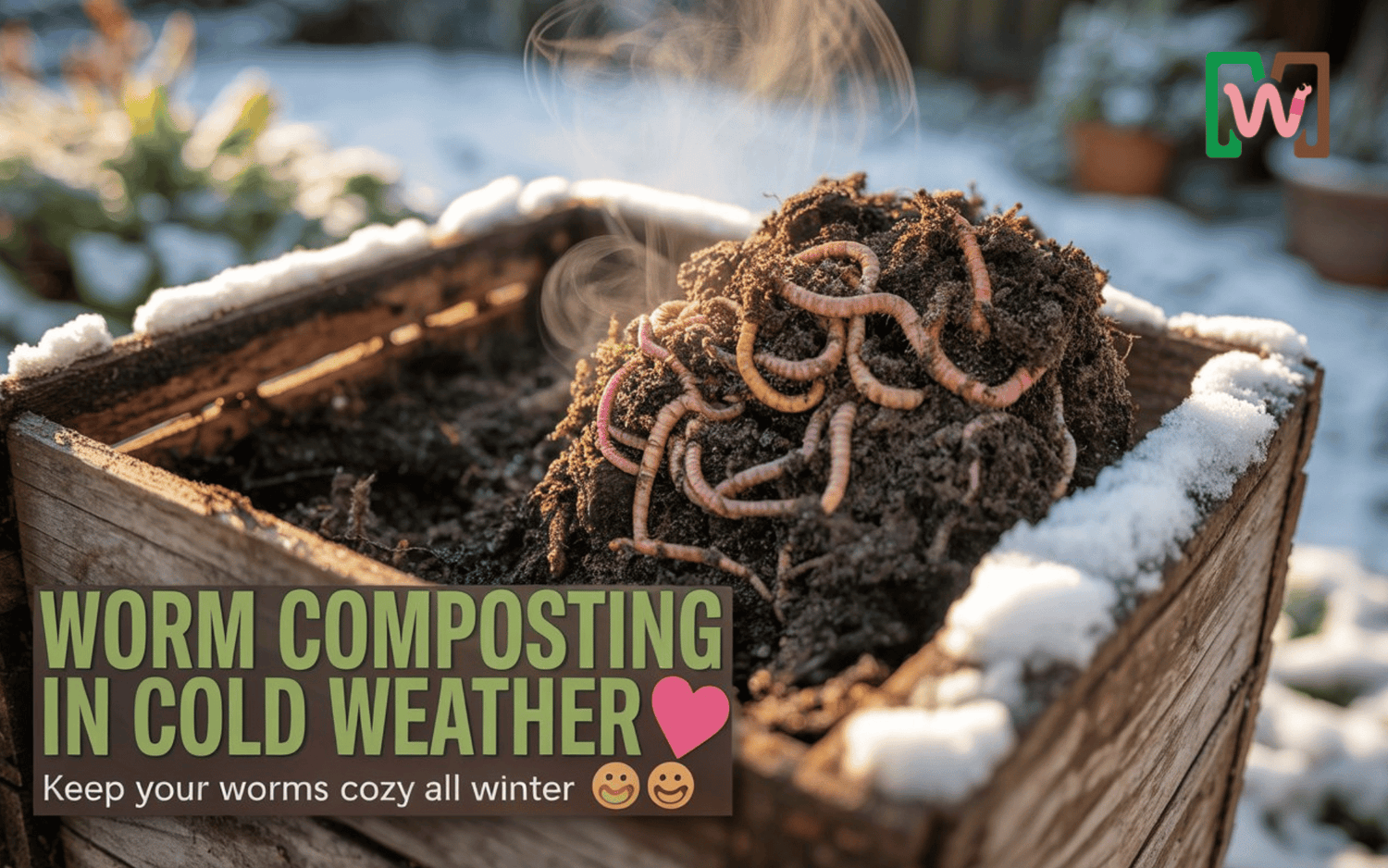
If you’ve ever worried about your worms freezing in winter, you’re not alone. Many beginners ask me things like can worms survive winter or do worms survive winter at all?
I’m Samantha — most people call me Meme — and I raise composting worms every day in real worm bins and production systems. I’ve also killed more worms than most beginners will ever own.
Winter mistakes taught me this fast:
Cold doesn’t just slow worms down — it can wipe out an entire bin if you’re not prepared.
The good news? You don’t need fancy equipment or guesswork. You just need to understand how worms react to cold and how to protect them before temperatures drop too far — especially if you’re wondering will red wigglers survive the winter in your setup.
Quick Answer
Worms slow down in cold weather and can die if their bedding freezes. Keeping worm bins insulated, dry, and above freezing helps worms survive winter safely. So yes, worms can survive winter — but only when conditions are controlled.
Not a reader? Don't worry, we have created a video for you:
Why Cold Weather Is Hard on Composting Worms?
Composting worms like Red Wigglers and European Nightcrawlers are surface dwellers. They don’t burrow deep enough to escape freezing temperatures the way wild earthworms do.
This is why questions like can red worms survive winter or can red wigglers survive winter come up so often.
When it gets cold:
- Worms eat less
- Reproduction slows or stops
- Freezing temperatures can kill them quickly
👉 Must Read : Ideal Environment for Composting Worms

What Temperature Is Too Cold for Worms?
Most composting worms are happiest between 55°F and 77°F.
- Below 50°F → activity slows
- Below 40°F → stress increases
- At 32°F (freezing) → worms can die
Cold weather doesn’t have to mean dead worms — it just means you need to plan if you want your worms to survive winter.
Where to Keep Your Worm Bin in Winter?
Location matters more than almost anything when people ask me do worms survive winter indoors vs outdoors?
Best Winter Locations
- Basements
- Garages (if they don’t freeze)
- Laundry rooms
- Utility rooms
Avoid placing bins directly on concrete floors — concrete pulls heat away fast and is one of the biggest reasons red wigglers don’t survive the winter.
👉 Must Read : DIY Worm Bins: Easy and Inexpensive
How to Insulate a Worm Bin for Cold Weather?
This is where many people lose worms and then assume worms can’t survive winter.
Simple insulation that works:
- Thick cardboard
- Towels or old blankets
- Straw or shredded paper
- Foam boards
Wrap the bin, not the air holes. Worms still need oxygen. From experience, dry insulation works better than thick, wet layers — especially if you’re trying to make sure red wigglers survive the winter.
Bedding Matters More in Winter
In cold weather, bedding does two jobs:
- Holds warmth
- Absorbs moisture
This is where most winter bins fail — they get too wet, not too cold. Wet bedding freezes faster, which answers the question: can worms survive winter outdoors? — usually no.
What I recommend:
- Fluffy, carbon-rich bedding
- Bedding that drains well
- Extra dry bedding on top as insulation
Must Visit :
Should You Feed Worms Less in Winter?
Yes. Cold worms eat slower. This is true even when people ask can red wigglers survive winter if I keep feeding them normally? Overfeeding actually makes things worse.
Overfeeding leads to:
- Sour bins
- Bad smells
- Pest problems
Feed smaller amounts and wait until food is mostly gone before adding more.
Must Read : Banishing Bad Smells: Worm Composting Bin Odors

Can Worms Survive Freezing Temperatures?
No — composting worms cannot survive frozen bedding.
If your bin is outdoors:
- Insulation alone may not be enough
- Move it inside if possible
- Or combine insulation with a warmer location
This is the hard truth behind can worms survive winter — they survive cool, not frozen.
👉 Must Read : Worm Composting in Cold Weather vs Winterizing Your Bin
Best Worms for Cold Weather Composting
Some worms handle cold better than others, which is why people ask, will red wigglers survive the winter compared to other worms?
Red Wigglers
- Very hardy
- Slow down in cold but bounce back
👉 Must Read : Caring for Red Wigglers
European Nightcrawlers
- Handle temperature swings better than most
- Good choice for cooler setups
Must Read : Advantages of European Nightcrawlers
Common Winter Worm Bin Mistakes
From experience, these are the big ones:
- Leaving bins on concrete
- Overfeeding
- Letting bedding get soggy
- Checking the bin too often
Worms do better when left alone during winter.
People Also Ask (Winter Worm Care)
Can worms survive winter outside?
Only if the bedding never freezes. Most home bins do better indoors during winter.
Do worms stop composting in winter?
They slow down, but they don’t stop completely if kept warm enough.
Should I add a heat mat to my worm bin?
Heat mats can help, but insulation and location matter more.
What temperature should a worm bin be in winter?
Aim to keep the bin above 50°F for healthy worms.
Final Thoughts
Winter worm composting isn’t about doing more — it’s about protecting what you already have.
If you insulate your worm bin, manage moisture, and reduce feeding, your worms — including red wigglers — can survive winter and bounce back strong in spring.
I’ve learned the hard way so you don’t have to.





Leave a comment
All comments are moderated before being published.
This site is protected by hCaptcha and the hCaptcha Privacy Policy and Terms of Service apply.