



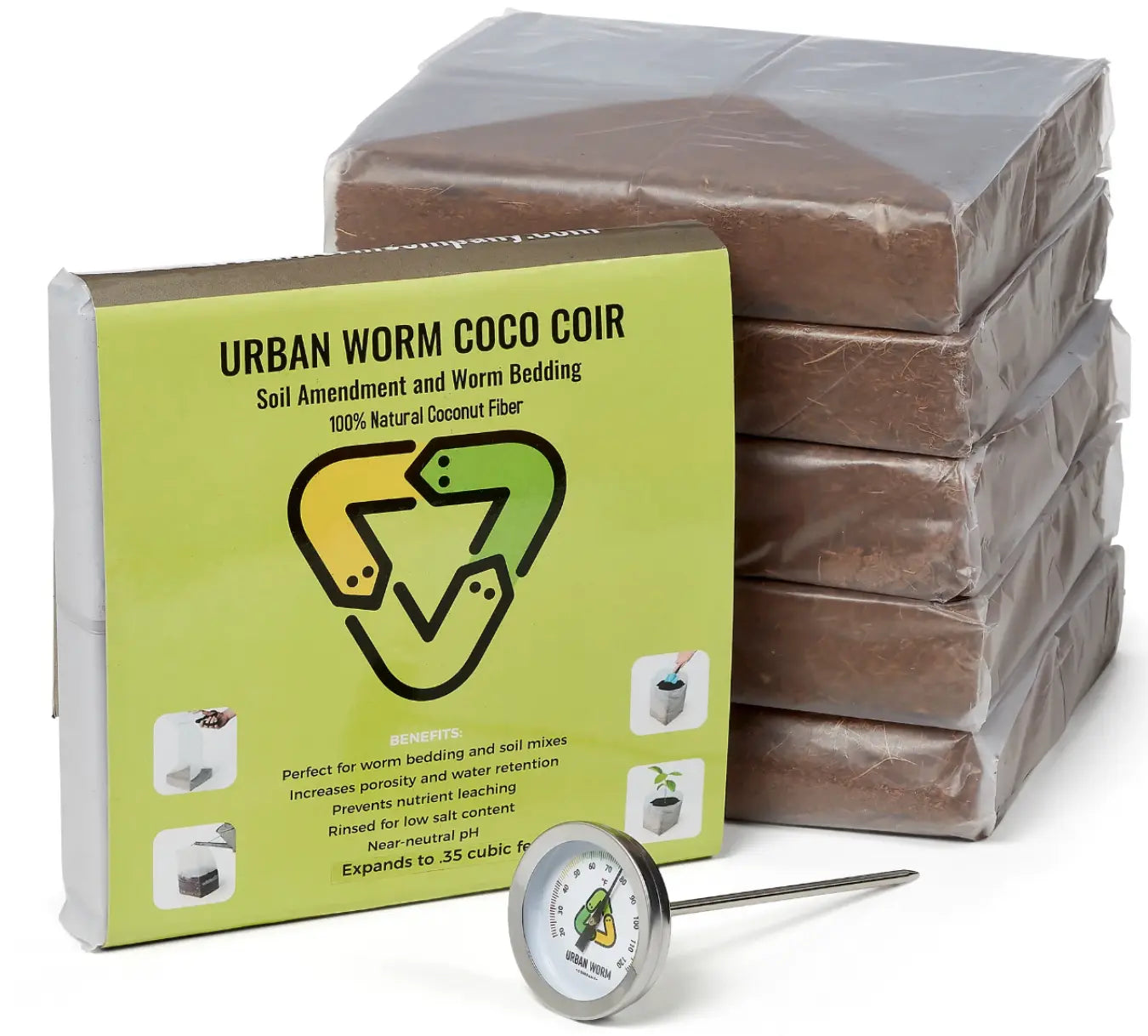
Coconut coir is a versatile and sustainable material that is becoming increasingly popular in the world of worm farming. In this blog post, we will explore everything you need to know about coconut coir, including how it is used and why it is such a valuable resource for worm farmers.
What is Coconut Coir?
First, let's talk about what coconut coir is and where it comes from. Coconut coir is a byproduct of the coconut industry, specifically the outer husk of the coconut. The husks are harvested, soaked in water, and then processed to separate the fibers from the dust and debris. The fibers are then cleaned, dried, and compressed into bricks or bales. This material is often referred to as coco coir, or simply "coir." Coconut coir is the perfect bedding material for worms as it creates a comfortable and ideal burrowing environment that is neither too dry nor too damp. This bedding is essential for the worms' well-being and aid in the breakdown of food matter.

Benefits of using coconut coir for Worm Farming
One of the main benefits of coconut coir is its high water retention capability. It can hold up to eight times its weight in water, which makes it an ideal material for worm farming. In worm farming, moisture is key to the health and well-being of the worms. When the bedding is too dry, the worms will become stressed and may die. On the other hand, if the bedding is too wet, it can lead to anaerobic conditions which can cause the bedding to smell and attract pests. Coconut coir is able to maintain the perfect moisture balance, providing a comfortable and healthy environment for the worms.
Another benefit of coconut coir is its pH neutrality. Worms thrive in a slightly acidic environment, between 6 and 7 pH. Peat moss, which is often used as a worm bedding, has a pH of around 4, which can be too acidic for the worms. Coconut coir, on the other hand, has a pH of around 6, making it the perfect environment for worms.
Coconut coir is also an excellent source of carbon for the worms. Carbon is an essential component of the worm diet, as it helps to balance out the high levels of nitrogen found in food scraps. Coconut coir provides a slow-release source of carbon, which helps to maintain the ideal C:N ratio in the worm bin.
In addition to its water retention and pH neutrality, coconut coir is also a sustainable and eco-friendly choice for worm farmers. It is a renewable resource that is easily replenished, and it is also biodegradable and compostable. This makes it a great alternative to peat moss, which is a non-renewable resource that is often harvested from fragile ecosystems.
Buy Coco Coir
Things to keep in mind when using coconut coir
When it comes to using coconut coir in worm farming, there are a few things to keep in mind. First, it is important to use a high-quality coconut coir. Not all coconut coir is created equal, and some brands may contain contaminants or be of low quality. Look for a reputable brand that is specifically marketed for worm farming (Click here to get your high-quality Coco Coir from Memes Worms).
Next, it is important to prepare the coconut coir before adding it to the worm bin. The coir should be soaked in water for at least 24 hours, and then squeezed out to remove any excess water. This will help to break down the fibers and make it easier for the worms to burrow through the bedding.
Finally, it is important to maintain the moisture level of the bedding. As mentioned earlier, coconut coir has a high water retention capability, so it may not need to be watered as often as other beddings. However, it is still important to check the moisture level regularly and add water as needed.
Where to get your very own coco coir for your worm farm
Stock up on your very own coco coir through Memes Worms, where after analysing and using coir bedding from many different sources, we have created the best coconut coir specifically for worm farmers and composters on the market, and kept it as affordable as possible!
Click here to get your Coco Coir
Conclusion
To conclude, coconut coir is an excellent choice for worm farmers. Its high water retention capability, pH neutrality, and sustainable sourcing make it a perfect choice for maintaining the health and well-being of the worms.





Leave a comment
All comments are moderated before being published.
This site is protected by hCaptcha and the hCaptcha Privacy Policy and Terms of Service apply.