



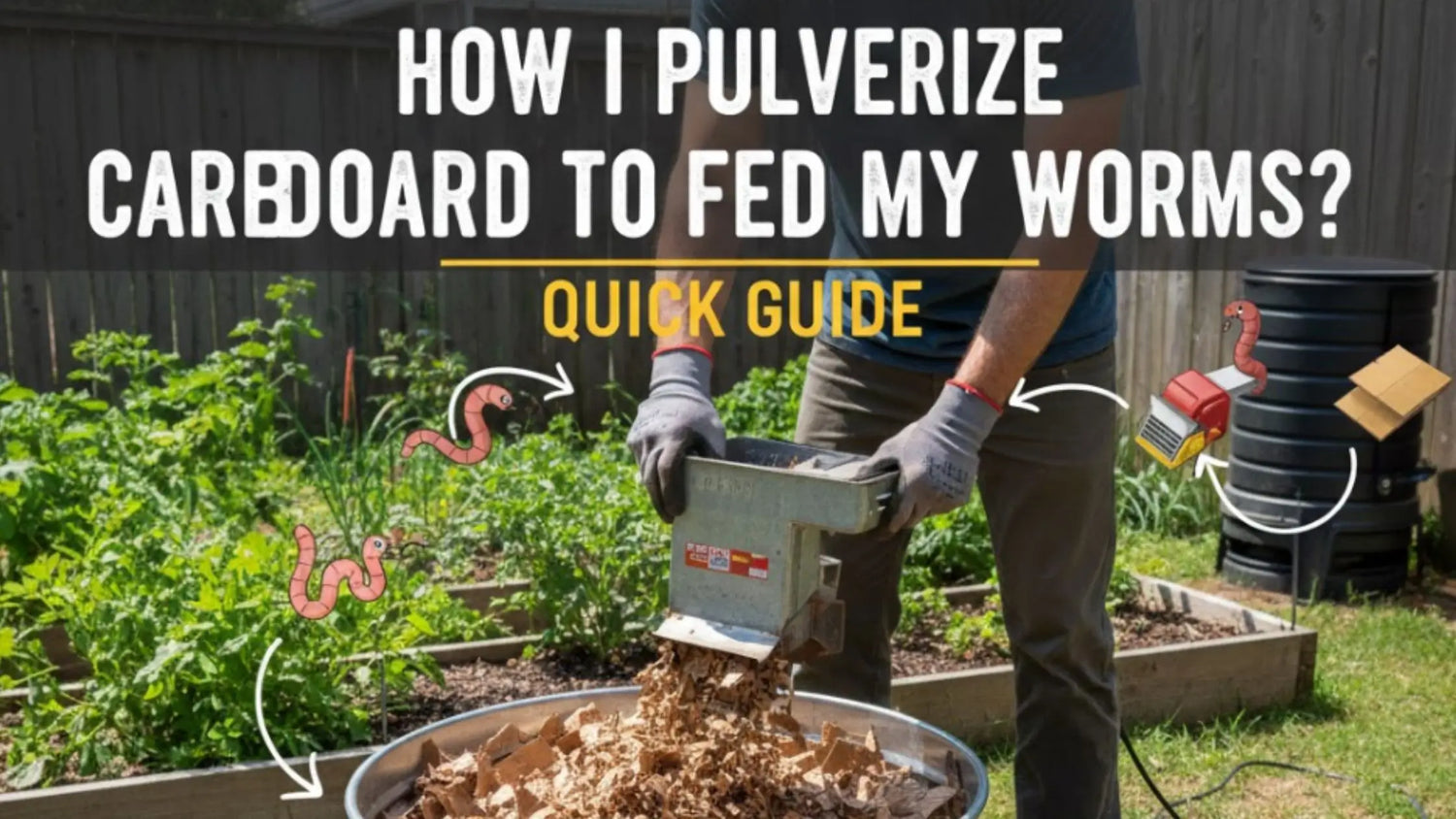
Today I’m going to show you exactly how I turn regular cardboard into nutritious, worm-friendly material in just seconds. Whether you’re a beginner to worm farming or already running a bin system, preparing cardboard correctly can make all the difference in the health of your composting worms and the efficiency of your system.
This method is fast, simple, and perfect if you're looking for a sustainable way to reuse clean cardboard and feed your worms at the same time. Let’s get into it.
Why Use Cardboard in Your Worm Bin?
Cardboard is one of the best carbon-rich (brown) materials for your worm bin. It acts as worm bedding, absorbs moisture, neutralizes acidity, and breaks down slowly to give your worms something to burrow in. But whole or hand-torn cardboard takes time to decompose. That’s why shredding or pulverizing it can speed up your vermicomposting and make the bin more efficient.
My Fast Method to Pulverize Cardboard
I used a cardboard pulverizer that breaks down pieces of clean cardboard into fluffy, soil-like worm bedding in just seconds. This machine saves time, energy, and gives a consistently sized product that’s easy for worms to digest.
Here’s how I do it step-by-step:
1. Choose the Right Cardboard
Start with plain, brown cardboard only — no glossy ink, no colored dyes, and no plastic-coated materials. These can contain chemicals that harm your worms or slow down decomposition. I typically save boxes from deliveries, food packaging, or paper towel rolls.
2. Remove Labels and Tape
Before putting cardboard into the machine, I make sure all plastic tape, stickers, and shipping labels are removed. Even small amounts of plastic can ruin your entire bin over time.
3. Break It Down into Manageable Pieces
While the pulverizer can handle thicker cardboard, I pre-cut boxes into smaller pieces so they feed more easily into the unit. This helps the motor run smoothly and extends the life of the machine.
4. Safety First – Protect Yourself
Pulverizing cardboard creates fine dust particles and noise, so I always wear:
-
A dust mask to avoid inhaling particles
-
Ear protection to prevent damage from prolonged noise exposure
-
Gloves when handling tougher cardboard
Safety gear is essential even if you're only operating the machine for a few minutes.
5. Feed and Pulverize
Feed the cardboard into the pulverizer gradually. The result? A fluffy, lightweight mixture that resembles sawdust or compost worm bedding. This material absorbs water easily, mixes beautifully with food scraps, and is highly palatable for worms.
Must Read : What To Feed Worms in 2025: The Complete Guide
How to Use Pulverized Cardboard in the Bin?

Once I’ve made a fresh batch, I use the pulverized cardboard in several ways:
-
As bedding when starting a new worm bin
-
To cover food scraps, which helps avoid odors and fruit flies
-
To regulate moisture when the bin is too wet
-
As a buffer to balance high-nitrogen foods (like veggie peels)
The texture and surface area of pulverized cardboard make it easier for microbes to colonize, which speeds up decomposition and provides an ideal environment for worms.
Why Do I Recommend This Method?
Aside from speed, this technique:
-
Keeps cardboard out of landfills
-
Saves money on commercial worm bedding
-
Creates a high-quality, clean, and consistent worm environment
-
Supports moisture control in both small and large worm farms
It’s also a great way to scale your worm farm without increasing your workload.
Where to Get Tools and Bedding?
At Meme’s Worms, I offer several helpful products that pair perfectly with this process:
-
2-Gallon Compost Bedding Blend – great for starter bins
-
Durable Worm Composting Bins – designed to support long-term worm health
- Pre-made worm food mixes – for faster castings output
While I ship to most locations, some products have limited shipping due to their size or materials. I always encourage customers to check availability based on their location at checkout.
Supporting the Worm Farming Community
One thing I truly love about this work is the community we’ve built. Through my YouTube videos, blogs, and emails, people regularly share worm farm tips, ask great questions, and provide insights that help others avoid common mistakes.
Many viewers have shared how they’ve used our methods to:
-
Create thriving worm farms at home
-
Teach vermiculture to students
-
Launch small worm composting businesses
It’s proof that with the right tools and guidance, anyone can build a successful worm bin setup.
Must Read : Worm Castings vs Worm Tea: When to Use Each for Best Garden Results
FAQs
1.What type of cardboard is safe for worms?
Only use plain, brown cardboard with no glossy printing, plastic coatings, or strong chemical adhesives. Avoid colored or waxy cardboard.
2. Do I need a pulverizer to feed cardboard to worms?
No, but it helps. Hand-torn cardboard works too—it just takes longer to break down. The pulverizer speeds up the process and creates a finer texture.
3. Can I use pulverized cardboard as the only bedding?
Yes, it works great as standalone bedding. You can also mix it with coconut coir, shredded newspaper, or leaf mulch for diversity.
4. How often should I add cardboard to my worm bin?
Add a handful whenever you feed your worms. Always cover food scraps with bedding to balance moisture and reduce odors.
5. Is cardboard better than newspaper for worm bins?
Both are useful, but pulverized cardboard has a better texture and absorbs moisture more evenly. Newspapers may contain inks not ideal for worms.
AUTHOR
About the Author
Hi, I’m Samantha aka Meme, founder of Meme’s Worms, a commercial worm farm based in Valdosta, Georgia.
I’m a hands-on worm farmer, educator, and business owner who has spent years raising, harvesting, and shipping Red Wigglers, European Nightcrawlers, and composting worms to gardeners, homesteaders, educators, and commercial growers across the United States.
Everything I teach and write about here is based on real-world experience, not theory.





Leave a comment
All comments are moderated before being published.
This site is protected by hCaptcha and the hCaptcha Privacy Policy and Terms of Service apply.