



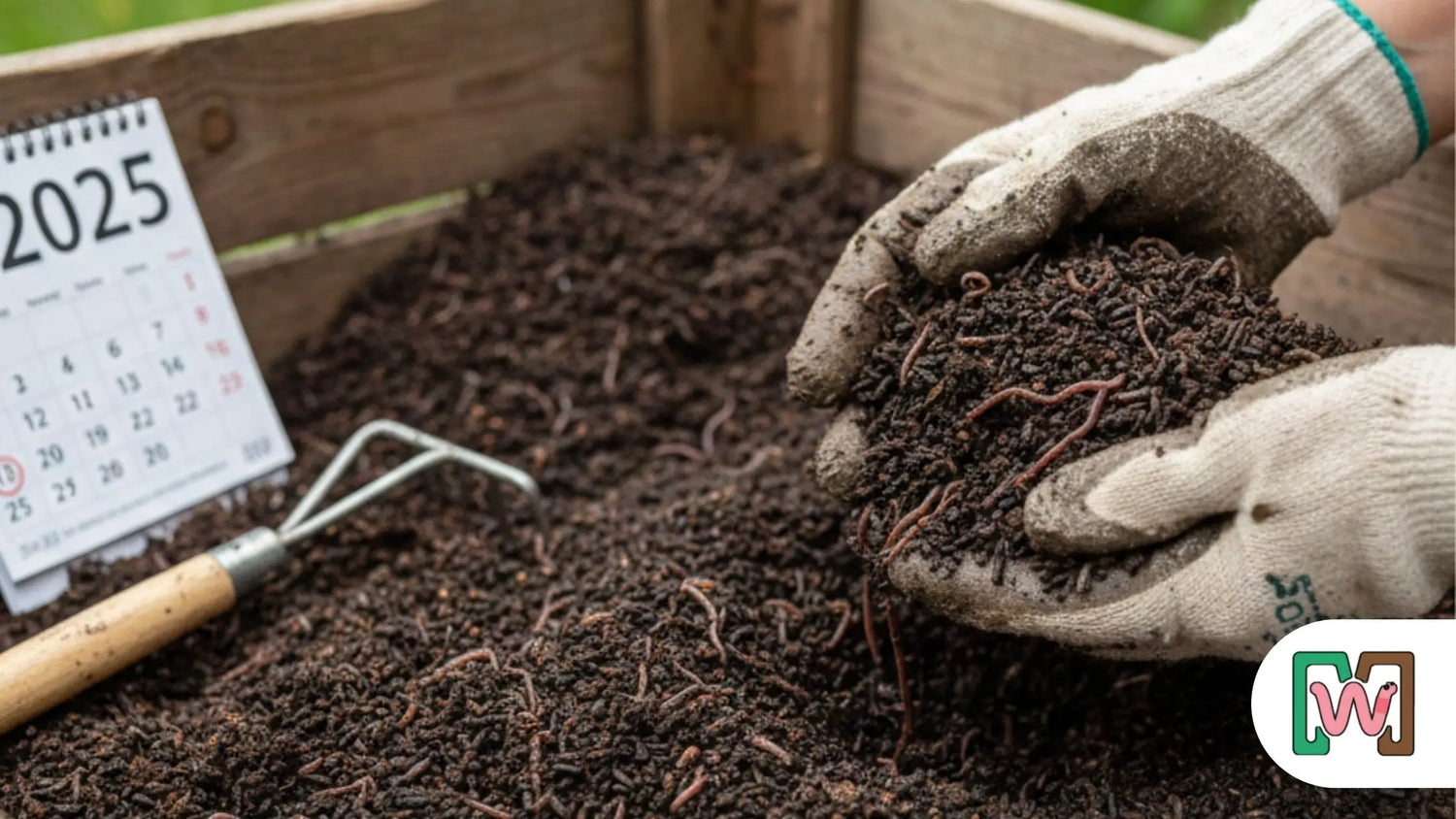
There comes a moment in a worm bin when the whole thing begins to look finished. Not in the perfect-ending sense, more like a small hint that the worms have been working for a while. The bedding darkens. The bin feels heavier. Sometimes there is this faint earthy smell that may remind you of the first soil you touched as a child. And that is usually where people start wondering how to harvest worm castings without making a mess or confusing the worms or themselves.
Some folks like to think of castings as soil. Others call it compost. Someone may ask what is worm casting, and you might shrug and say something like soil that has passed through a worm’s body. It is not a strict definition. It is just how people talk about the stuff. What matters is that castings can nourish plants in ways you may only notice slowly. Roots settle in more easily. Water behaves differently. Leaves sometimes look richer.
Harvesting feels simple on paper, although it rarely goes that way in the first attempt. You may scoop up too many worms. Or too much bedding. Or not enough of anything. But that is fine. Worm bins tolerate a little clumsy handling.
When people search how to harvest worm castings from worm bin setups, they might imagine a single right method. There isn’t one. There are a handful of ways, and each may work depending on mood, day, or how patient you feel. Sometimes you just spread the compost in a tray under a lamp and wait for the worms to slip downward. That still works. Sometimes you might shift everything to one side, leave fresh bedding on the other side, and let the worms drift. That works too.
Must Read : The Difference Between an Earthworm & Compost Worm
Screens come in once someone tries to get a cleaner product. A worm casting screener can separate worms from castings with a quick shake. It may leave chunky bits. You can toss those back into the bin. Some gardeners experiment with rotating barrels. Others simply rub the compost between their palms. The point is that each approach can work, depending on how gentle you are or how tidy you want the results.
People who try to understand how to harvest earthworm castings sometimes imagine a strict timeline. There isn’t one. Worms move at their own pace. A full bin may take two months. It can take longer if the temperature drops. Or shorter if the bin stays warm and the worms get just enough to eat. Vermicomposting behaves more like cooking on low heat. A slow transformation. The moment you try to rush it, it may resist.
And yes, a moment will come when you need to decide how to collect worm castings without disturbing your worms too much. You might scoop a corner. Or harvest half and leave the rest intact. You may even feel odd doing it. Worm bins often become small ecosystems that feel alive in a quiet, comforting way.
After harvesting comes the next curiosity. How to use worm castings once you finally have them in your hands. Most people sprinkle them on top of pots. Some mix them into soil. A few brew a mild tea. Castings can behave in gentle ways. They rarely burn plants. They may make seedlings feel more secure. They can soften compacted soil. It is not magic. Just slow biology.
Then there is the part nobody warns you about: storing them. People discover this the hard way. They seal castings in an airtight container and come back weeks later to find everything compacted and lifeless. So understanding how to store worm castings may save you the trouble. Keep them slightly moist. Never bone dry. Never sealed completely. Let them breathe. Let them stay alive. Castings can remain usable for months if kept with a little care.
And gardeners like to circle back to the basics. They ask again: what is worm casting and why bother? Castings can improve soil texture. They may introduce helpful microbes. They can hold water around plant roots. They may even help plants stress less in hot weather. None of this needs to be taken as hard fact. Plants react in quiet, complicated ways. Castings simply seem to help.
People who compost long enough start feeling drawn to worm bin routines. They check the bin at odd hours. They wonder how to harvest worm castings from worm bin setups with less hassle next time. They sometimes sketch out their own little harvesting tools. A few try to design a personal worm casting screener from leftover mesh. It becomes a small hobby within a hobby.
There is also a growing interest in small urban vermicomposting. Folks want to know how to harvest worm castings in tight spaces. They may have a single bin under the sink. Or a tote on a balcony. Harvesting may feel awkward in tiny apartments, but it still works with slow, patient movements. Spread the compost on a towel. Let the worms wander downward. Brush away the finished castings. It takes longer, but it feels strangely calming.
And then come the comparisons. People ask how to harvest earthworm castings from outdoor bins versus indoor ones. Outdoor systems can feel heavier and more unruly. They may smell different. They may involve different worms. Indoors you get more control. Outdoors the process may rely more on weather. Both can work if you keep moisture balanced.
Must Read : What is the difference between vermicompost and vermiculture?
After a while, gardeners settle into a routine. They harvest small batches more frequently. They stop worrying about perfection. They let worms do their work quietly. The garden responds in its own quiet language.
Once you begin using your castings, you may notice slow changes in your plants. A slightly fuller leaf. A more confident root system. A pot that needs less watering. This is where people begin to search How to Use Worm Compost and explore other uses: seed starting, houseplant revival, heavy-feeder vegetables. Castings can help in nearly every situation, though the effect can be subtle.
Eventually, a new question arises. How to store worm castings through winter or long gaps. Many gardeners slide the castings into a breathable cloth sack. Others keep them in a wooden box with small holes. As long as the material stays barely moist and continues to breathe, it can stay potent for many months.




Leave a comment
All comments are moderated before being published.
This site is protected by hCaptcha and the hCaptcha Privacy Policy and Terms of Service apply.