



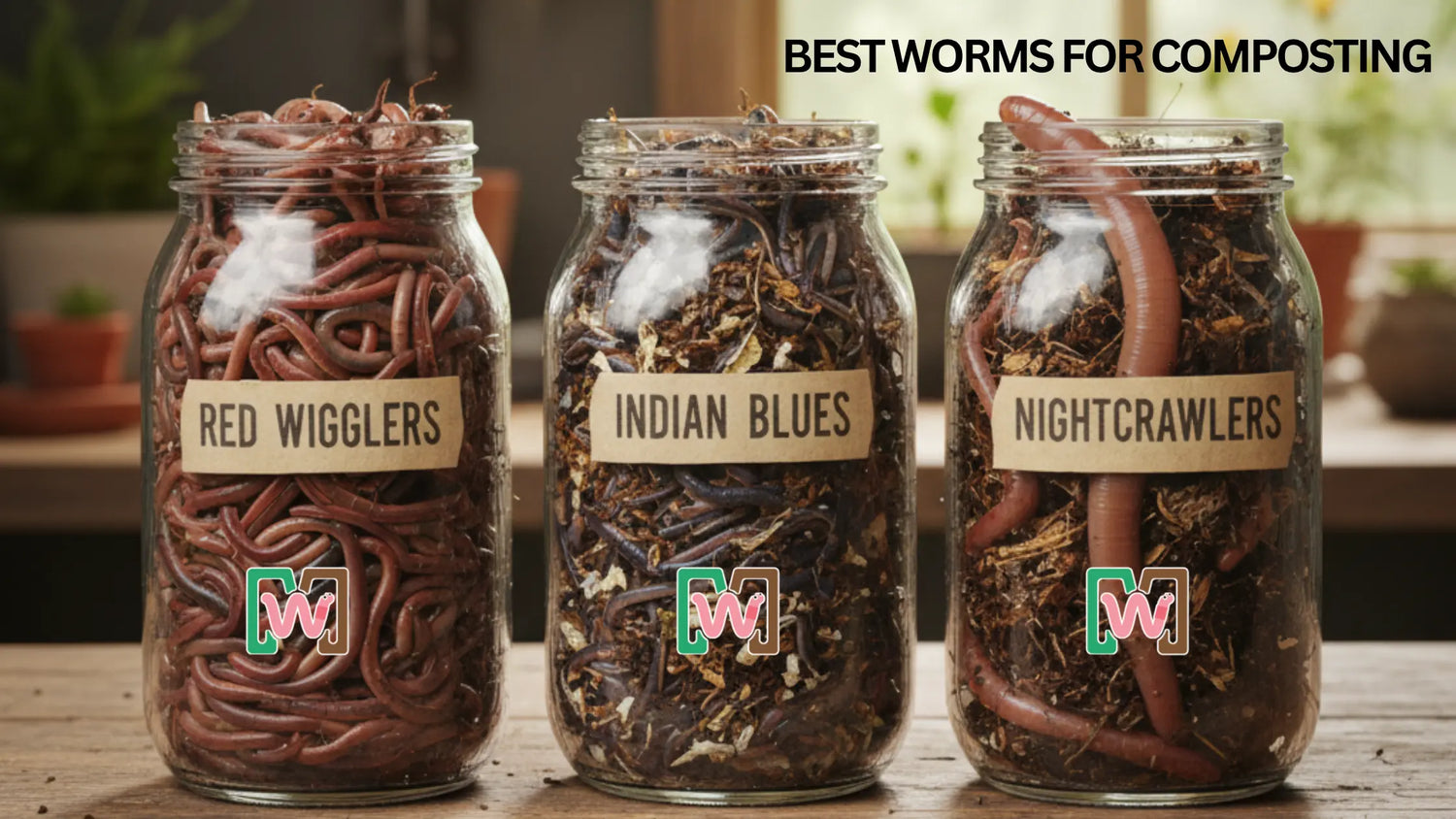
Introduction: The World of Composting Worms
Composting worms have revolutionized the way we handle food scraps and organic waste. By choosing the right composting worm, you can turn your compost pile into a thriving ecosystem. In this guide, we'll explore the best worms for composting, focusing on red wigglers, Indian blues (blue worms), and European nightcrawlers.
Red Wigglers: The Composting Superstars
The Ideal Choice for Vermicomposting
Red wigglers, also known as red worms or tiger worms, are the most popular compost worms for indoor composting. Their adaptability and efficiency make them excellent for worm bins and vermicomposting systems.
Benefits of Red Wigglers
- Fast Composting: They turn food scraps into worm castings quickly.
- Worm Bin Friendly: Perfect for worm composting bins.
- Sustainable Living: Contribute to reducing landfill waste.
Indian Blues: The Vibrant Composters
A Unique Option for Composting
Indian blues, or blue worms, are known for their striking color and vigorous movement. These epigeic worms add a unique flair to composting and are effective in breaking down tough materials.
Benefits of Indian Blues
- Adaptability: They can adapt to various environmental conditions.
- Efficient Decomposers: Excellent at turning food scraps into compost.
- Aesthetic Appeal: Their vibrant color adds visual interest to worm bins.
Must Read : New to Worm Composting? Avoid These 5 Beginner Mistakes
European Nightcrawlers: The Gentle Giants
Robust Composters for Outdoor Environments
European nightcrawlers are larger anecic worms suitable for outdoor composting systems. Their size and burrowing behavior make them great for soil aeration and organic matter breakdown in compost bins.
Benefits of European Nightcrawlers
- Soil Improvement: Enhance garden soil structure and water retention.
- Outdoor Composting: Ideal for larger-scale composting needs.
- Fishing Bait: Also popular as bait for fishing enthusiasts.
Worm Species Comparison: Red Wigglers vs Indian Blues vs European Nightcrawlers
|
Feature |
Red Wigglers |
Indian Blues (Blue Worms) |
European Nightcrawlers |
|
Size |
2-5 inches |
3-5 inches |
5-8 inches |
|
Color |
Reddish-brown |
Blueish |
Darker brown or gray |
|
Habitat Preferences |
Various conditions |
Warm temperaturess |
Cooler temperatures |
|
Composting Efficiency |
Good |
Excellent |
Moderate |
|
Ideal for |
Indoor vermicomposting |
Versatile composting |
Outdoor composting |
|
Reproduction Rate |
Moderate |
Rapid |
Slower |
|
Burrowing Behavior |
Less proficient |
Moderate |
Excellent |
|
Diet (Food Scraps Handling) |
Wide variety |
Wide variety |
Selective |
|
Sensitivity to Environmental Changes |
Low |
High |
Moderate |
|
Use in Worm Bins |
Excellent |
Good |
Moderate |
|
Use in Compost Piles |
Good |
Moderate |
Excellent |
|
Fishing Bait |
Suitable for small fish |
Not commonly used |
Suitable for big fish |
|
Availability |
Hard to find |
Widely available |
Widely available |
Must Read : Vermiculture 101: How To Start A Worm Farm as a Business or a Hobby
Worm Farming Techniques
Vermicomposting with Different Worm Species
Worm farming, or vermicomposting, is an art that requires understanding the unique characteristics of different worm species. Here's how to create a thriving worm composting bin with various species:
Red Wigglers
- Preferred Environment: Warm 75°, moist bedding
- Diet: Wide variety of food scraps, including fruits, vegetables, and coffee grounds
- Best For: Indoor composting and quick conversion of waste to worm castings
Indian Blues (Blue Worms)
- Preferred Environment: Adaptable to various conditions
- Diet: Similar to red wigglers but may prefer more fibrous materials
- Best For: Versatile composting, both indoor and outdoor
European Nightcrawlers
- Preferred Environment: Cooler temperatures and outdoor composting bins
- Diet: More selective, avoid acidic and oily foods
- Best For: Outdoor composting and soil aeration
Creating the Perfect Compost Pile
A healthy compost pile or compost bin is the foundation of successful worm farming. Here are some tips:
- Location: Choose a spot that provides the right temperature and moisture levels for your chosen worm species.
- Bedding: Use materials like shredded newspaper, cardboard, or coconut coir to create comfortable bedding.
- Food Scraps: Add a variety of food scraps, avoiding oily, spicy, or acidic items.
- Aeration: Regularly turn the compost to ensure proper aeration.
- Moisture Control: Maintain the right moisture levels to keep the worms happy without drowning them.
- Monitoring: Regularly check for signs of healthy worm activity and address any issues promptly.
Worm Castings: Black Gold for Gardeners
Worm castings, often referred to as "black gold," are a valuable byproduct of worm farming. Here's why they're prized by gardeners:
- Nutrient-Rich: Packed with essential nutrients like nitrogen, phosphorus, and potassium.
- Soil Structure: Improve soil aeration, drainage, and water retention.
- Plant Growth: Enhance plant growth and resistance to diseases.
- Eco-Friendly: A sustainable alternative to chemical fertilizers.
- Usage: Mix with garden soil or use as a top dressing for plants.
Can You Use Garden Worms or Earthworms in Your Compost Bin?
Sure, there are lots of worms in your garden but they aren't the best option for your compost bin. In fact, using worms dug from your yard almost always fails. Here's why:
Garden earthworms live deep in the soil, not in shallow bedding. They don't like concentrated food scraps, they won't reproduce in a confined bin, and when trapped in one, they either leave or die. Composting worms, by contrast, are surface-dwellers (epigeic species) built to live in decaying organic matter exactly the conditions inside a compost bin.
The reverse question matters too: composting worms like Red Wigglers CAN be added directly to your garden beds, where they'll enrich the soil around your plants; they just won't burrow deep like a nightcrawler will. If your goal is aerating garden soil, European Nightcrawlers are the better pick; if your goal is turning scraps into castings, keep your Red Wigglers in the bin.
Advice From Meme: What Makes a Worm Bin Actually Succeed
I'm Samantha, most people call me Meme and I run a commercial worm farm in Georgia. I work with composting worms every single day: raising them, shipping them, and helping beginners keep them alive. I've killed more worms than most people ever will not because I didn't care, but because I learned by doing. So here's what a decade of worm farming has taught me:
A good composting worm must: live in shallow bedding (not deep soil), eat decaying organic matter, tolerate moisture and temperature swings, reproduce in bins, and stay near the food surface. Every species recommended in this guide checks those boxes. Yard worms don't.
Almost every failed worm bin comes down to conditions, not worms. The most common culprits: too much food, wet compacted bedding, no airflow, or the wrong species entirely. If your bin smells or feels "off," fix the environment before blaming the worms.
Bedding matters more than food. Good bedding holds moisture without drowning your worms, allows airflow, feeds microbes, and buffers acidity. Get the bedding right and the rest becomes easy.
Before you buy worms, price matters far less than: the correct species for your setup, healthy bedding to receive them, seasonal shipping (order during cooler months to avoid heat losses in transit), clear care instructions, and real support after delivery.
Conclusion: Finding the Best Worms for Your Composting Needs
Choosing the best worms for composting is a crucial step in successful vermicomposting. Whether you opt for the composting superstar red wigglers, the vibrant Indian blues, or the gentle giants European nightcrawlers, understanding their unique characteristics will help you create a thriving composting system.
Explore our website for more resources, products, and guides to embrace the power of worms in your composting journey!





Leave a comment
All comments are moderated before being published.
This site is protected by hCaptcha and the hCaptcha Privacy Policy and Terms of Service apply.