



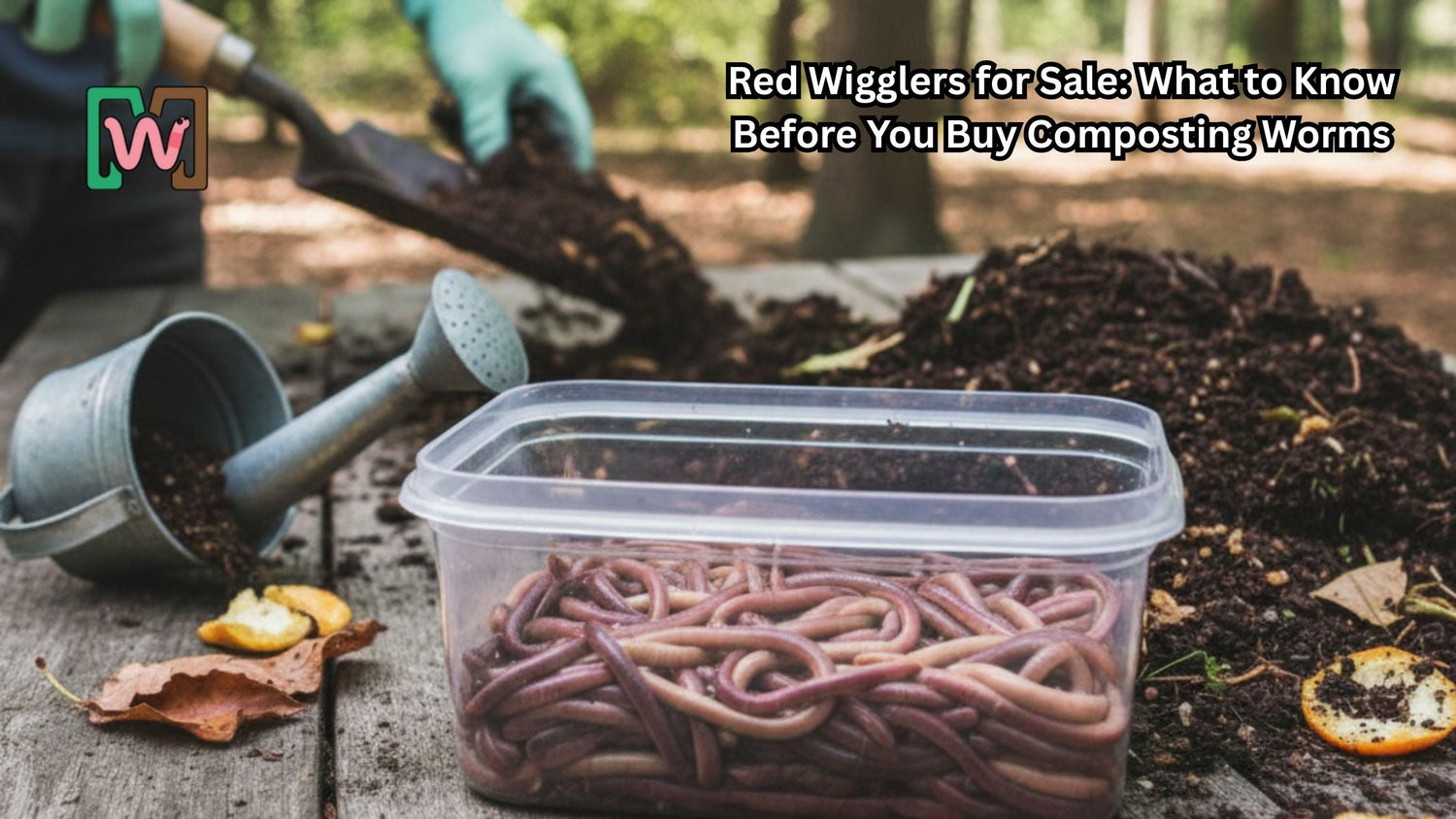
You can buy red wiggler worms online from a specialist worm farm that raises composting worms, provides clear quantity information, ships live worms with weather-aware handling, and explains what to do when your order arrives.
For worm bins, vermicomposting, food-scrap recycling, worm castings, and soil-health projects, it is usually better to buy from a dedicated composting-worm supplier than from a listing that simply says “red worms” or “bait worms.”
Memé’s Worms sells live red wiggler composting worms online for beginners, home gardeners, schools, community gardens, and larger vermiculture projects. If you’re looking to buy red wiggler worms online, standard orders are available in approximately 500-worm, 1,000-worm, and 2,000-worm options.
Shop Pure Red Wiggler Composting Worms →
What You Should Know Before Buying Red Wigglers Online
Before ordering live red wiggler worms, make sure the seller clearly explains:
- What type of worms are included
- Whether the worms are intended for composting
- Whether quantity is measured by weight, approximate count, or both
- When live worms are shipped
- How weather can affect shipping
- What live-delivery conditions apply
- What you need to do when the package arrives
- Whether the seller provides worm-bin care guidance
Live worms are not a standard parcel. Good shipping, prompt pickup or delivery receipt, prepared bedding, and proper care after arrival all matter.
What Are Red Wiggler Composting Worms?
Red wigglers are surface-dwelling composting worms used in worm bins and vermicomposting systems. They thrive in moist, organic bedding and feed on decomposing materials such as fruit and vegetable scraps, coffee grounds, tea leaves, shredded paper, cardboard, leaves, and other suitable organic matter.
They are different from the deep-burrowing earthworms commonly found in ordinary garden soil. Because red wigglers prefer rich organic material near the surface, they are well suited to managed worm bins, composting systems, worm towers, and compost-rich environments.
As red wigglers process organic material, they produce worm castings. Gardeners and composters commonly use worm castings in soil blends, containers, compost piles, and around plants.
Where Is the Best Place to Buy Red Wigglers for Composting?
The best place to buy live red wiggler composting worms is a worm farm or supplier that specializes in vermicomposting worms and makes its product, shipping, and care information easy to understand.
People commonly search for red wigglers at:
- Local bait shops
- Garden centers
- Online marketplaces
- Local worm sellers
- Specialist worm farms
Each option can be useful in the right situation. However, a bait-shop or marketplace listing may not explain the exact worm type, how the worms were raised, how they were packed, or whether they are intended for a compost bin.
For a successful worm-composting setup, choose a supplier that raises and sells worms for composting and provides practical support for new worm keepers.
Why Buy Red Wiggler Worms From Memé’s Worms?
Memé’s Worms is a family-run vermiculture business based in Valdosta, Georgia. The business serves local and nationwide customers with composting worms for sale, bait and fishing worms, worm castings, coco coir, and related supplies.
The standard red wiggler product is designed for customers who want composting worms for worm bins, food-waste recycling, gardening, soil-health projects, and vermiculture. The product is not sold as an unspecified “red worm mix.” It is described as red wiggler composting worms in the Eisenia group and as not including Indian blue worms.
A note about species language
Red wigglers are commonly associated with Eisenia fetida and Eisenia andrei. Because these worms are closely related and can have overlapping traits, Memé’s Worms does not present species labels as a laboratory genetic guarantee. The worms are sold in good faith as red wiggler composting worms (Eisenia spp.) for vermicomposting, soil health, and related uses.
That is useful information for buyers: the product is intended for composting performance, not for laboratory, legal, scientific, or regulatory species certification.
Buy Live Red Wiggler Composting Worms →
How Many Red Wigglers Should I Buy?
The right amount depends on the size of your worm bin, how much food waste you produce, the amount of bedding available, and whether you are starting a new bin or expanding an established system.
Memé’s Worms offers standard options in approximately:
- ½ lb — approximately 500 worms
- 1 lb — approximately 1,000 worms
- 2 lbs — approximately 2,000 worms
A smaller order can be a sensible choice for a first worm bin or a household that is still learning how much food waste its worms can process. A larger quantity may make sense for bigger bins, larger households, school projects, community gardens, or customers expanding an established composting system.
A common starting guideline is around one pound of worms per square foot of bin surface area. Treat this as a planning guideline, not a guarantee. Feeding rate and population growth depend on temperature, moisture, bedding, airflow, food type, and how well the bin is managed.
Choosing a starter quantity
|
Your setup |
Practical approach |
|
First small worm bin |
Start with a smaller quantity and feed gradually |
|
Typical household bin |
Consider an order that matches your bin surface area and food-scrap volume |
|
Large outdoor bin |
Use enough bedding and space before adding a larger quantity |
|
Classroom or community project |
Plan for the bin size, caretakers, food supply, and school schedule |
|
Existing healthy worm bin |
Add worms only if the bin has adequate food, bedding, and room |
|
Commercial or high-volume project |
Review bulk-order requirements before purchasing |
How Many Red Wigglers Are in a Pound?
Worm counts are approximate because red wigglers vary in size and life stage. A shipment can include mature worms, younger worms, cocoons, and bedding material.
For this reason, weight is often the clearest way to compare live-worm orders. Approximate counts are useful for planning, but they should not be treated as an exact individual-worm count.
If you need a particular quantity for a school, garden, farm, or commercial project, choose a product option based on the supplier’s stated weight and approximate count, then prepare enough bedding and habitat before delivery.
What Should I Look for Before Ordering Live Worms Online?
1. Clear product identification
Look for a listing that identifies the worms as composting worms and explains their intended use. Avoid assuming that every product called “red worms” is automatically suitable for vermicomposting.
2. Transparent quantity information
The seller should explain whether the order is sold by weight, approximate count, or both. Transparent listings help you choose an amount that fits your bin and project.
3. Shipping schedule
Live worms should be shipped on a schedule designed to reduce unnecessary transit time. Memé’s Worms states that composting products ship on Mondays and Fridays using USPS Priority Mail or UPS Ground, depending on the area and weather conditions.
4. Weather practices
Extreme weather can create risk for live shipments. A responsible seller may delay an order when conditions are unsafe. This is intended to protect the worms during transit.
5. Live-delivery conditions
Read the published guarantee terms before ordering. A live-delivery guarantee is not the same as a lifetime survival guarantee. The customer must follow the seller’s delivery, inspection, reporting, and care requirements.
6. Arrival instructions
Your worm bin should be ready before the package arrives. A supplier should provide clear information about unpacking, bedding, moisture, feeding, and temperature.
7. Real support
For new worm keepers, access to clear care information and a real point of contact can be as valuable as the initial order itself.
Can Red Wiggler Worms Be Shipped Safely?
Yes. Red wigglers can be shipped safely when the supplier uses appropriate packaging, schedules shipping carefully, and the customer receives the shipment promptly.
Memé’s Worms states that standard worm orders are shipped in breathable bags and protective shipping boxes. Standard orders typically arrive within 2–3 business days after shipment, although delivery times are estimates and can be affected by carriers or external conditions.
The company may delay or withhold shipments during extreme weather. Its published policy states that it does not ship when temperatures are 90°F / 32°C or above in order to protect live delivery.
What to do when your worms arrive
- Bring the package inside promptly.
- Do not leave it in direct sun, a hot garage, a mailbox, or freezing conditions.
- Open the package carefully.
- Inspect the worms and original packaging.
- Add the worms to prepared, moist bedding.
- Start feeding lightly while the worms settle in.
Standard Orders vs. Bulk Red Wiggler Orders
Customers looking for bulk red wiggler worms should understand that standard and bulk orders have different delivery requirements.
Standard orders
Standard red wiggler options include approximately 500, 1,000, and 2,000 worms. To qualify for Memé’s Worms’ live-delivery guarantee, customers must be present at delivery or request a Hold at Post Office arrangement before shipment. If a standard package is left unattended outdoors, in a mailbox, on a porch, or at a doorstep, the guarantee is void.
If there is a dead-on-arrival issue, the customer must notify Memé’s Worms within two hours of delivery confirmation and provide clear photo or video evidence of the worms, original packaging, and shipping label. Qualifying claims may receive one replacement shipment. No refunds are issued for live-worm shipments.
Bulk orders
Bulk red wiggler orders are handled differently to protect live animals in transit. Bulk orders are generally shipped Hold for Pickup at the customer’s local post office. They are not eligible for porch delivery and must be picked up within four hours of arrival.
For a bulk dead-on-arrival claim, customers must contact Memé’s Worms within two hours of pickup and provide clear photo or video evidence in the original packaging. Failure to meet the published requirements voids the live-arrival guarantee.
View Bulk Red Wiggler Options →
Are Bait-Shop Red Worms Good for Composting?
Some bait-shop worms may be suitable for composting, but buyers should not assume that all bait worms are the same as red wiggler composting worms.
Bait-shop labels may not identify the worms precisely or explain their source, handling, intended use, or shipping history. If you are fishing, that may be enough information. If you are building a worm bin, you need more confidence that the worms are suited to organic bedding, food-scrap processing, and vermicomposting conditions.
For composting, a specialist worm farm is often the better option because the supplier can provide information about the worms, shipment, bedding, and care.
How Do I Prepare a Worm Bin Before My Order Arrives?
Prepare your bin before your worms are delivered. A ready habitat helps reduce stress and makes it easier for the worms to settle in.
Start with bedding such as shredded cardboard, plain shredded paper, coco coir, aged leaves, or a combination of these materials. Moisten the bedding until it feels like a wrung-out sponge: damp throughout but not dripping.
Keep the bin in a shaded location with moderate temperatures and airflow. Avoid placing it in direct sun or in places that can become very hot or very cold.
When the worms arrive, place them gently on top of the bedding. They will move into the material on their own. Begin with a small amount of suitable food, then increase feeding only after you see that the worms are processing what you add.
Suitable starter foods can include fruit and vegetable scraps, coffee grounds, tea leaves, crushed eggshells, and softened plant material. Avoid overfeeding, especially during the first week.
What Do Red Wigglers Eat?
Red wigglers eat decomposing organic material. A balanced worm bin includes both food scraps and carbon-rich bedding.
Suitable worm-bin foods
- Fruit scraps
- Vegetable scraps
- Coffee grounds
- Tea leaves
- Crushed eggshells
- Softened leaves
- Shredded cardboard
- Plain shredded paper
Foods to limit or avoid
- Meat
- Dairy
- Oily foods
- Salty foods
- Heavily processed foods
- Large amounts of citrus
- Large amounts of onions or garlic
Feed small amounts and observe how quickly the worms process the material. If food remains for several days, add more bedding and wait before feeding again.
Can I Use Red Wigglers Directly in My Garden?
Red wigglers in garden beds are excellent for producing worm castings, but they are generally better kept in a worm bin or organic composting system than released directly into ordinary garden soil.
They prefer surface-level organic material, moisture, and rich bedding, and released red wigglers in garden soil often migrate away rather than establish themselves. Instead of placing the worms directly in garden beds, use their castings as a soil amendment.
Worm castings can be mixed into potting soil, added to planting holes, used as a top dressing around plants, blended into compost, or incorporated into garden beds.
Buy Red Wiggler Worms Online With Confidence
When buying red wigglers online, choose a seller that provides clear product information, transparent shipping conditions, practical care guidance, and an appropriate live-delivery policy.
Memé’s Worms offers composting worms for sale for people who want to start a worm bin, recycle food scraps, produce worm castings, improve soil, or expand a vermicomposting project.
Choose the quantity that fits your setup, prepare your bin before delivery, review the shipping and live-delivery terms, and be ready to receive your order promptly.
Shop Pure Red Wiggler Composting Worms →




Leave a comment
All comments are moderated before being published.
This site is protected by hCaptcha and the hCaptcha Privacy Policy and Terms of Service apply.