



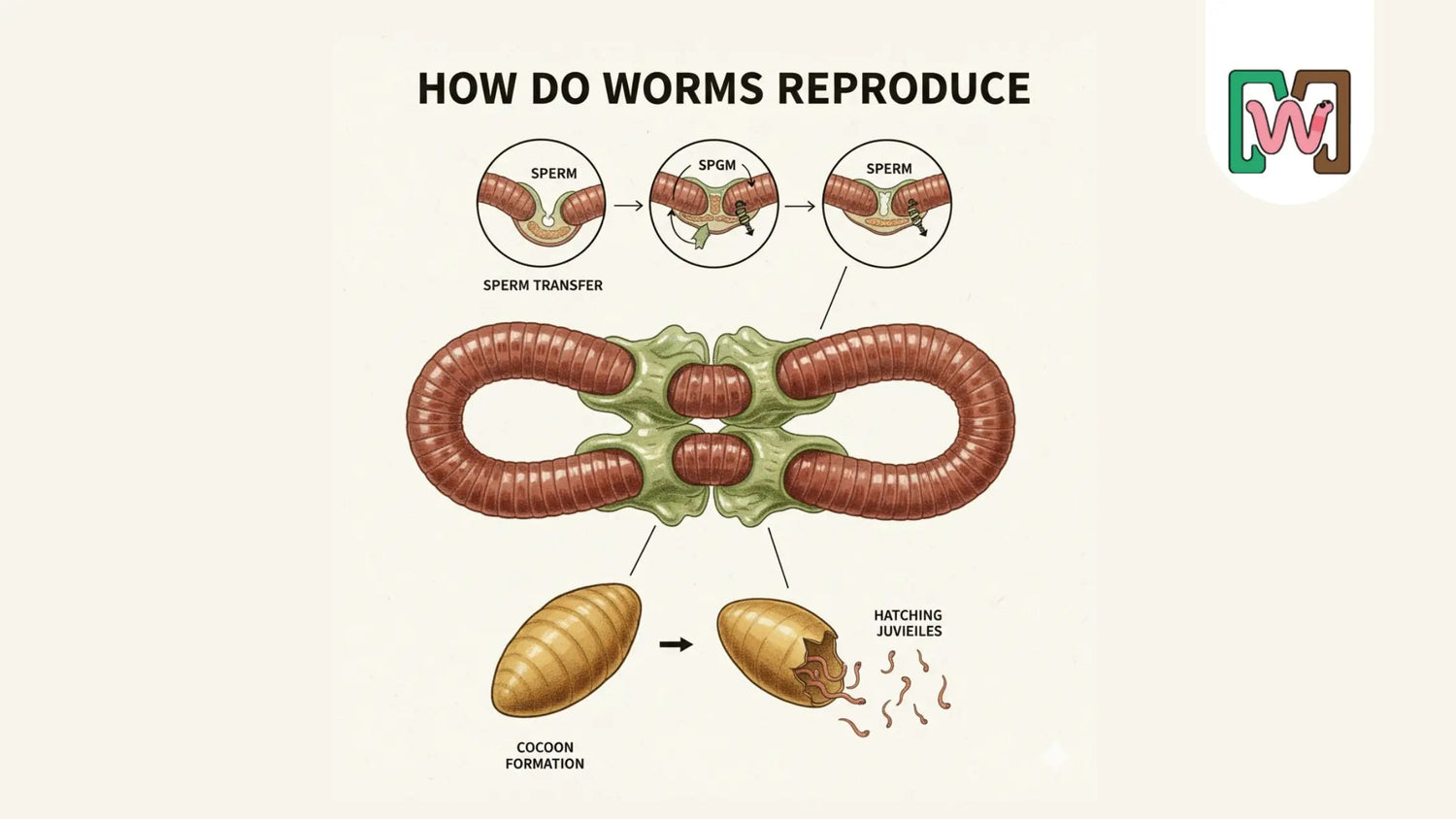
One of the most common questions I hear is: “How do worms reproduce so fast?”
But before we get into cocoons and baby worms, you should know where this advice is coming from.
I’m Samantha — most people call me Meme — and I raise composting worms every day in real worm bins and production systems. I’ve also killed more worms than most beginners will ever own. That’s how I learned this truth:
Worm reproduction doesn’t come from tricks or shortcuts. It comes from stable conditions, patience, and understanding how worms actually mate, form cocoons, and grow.
If you’ve ever opened a bin and suddenly seen tiny worms, cocoons, or a population boom, this guide will help you understand exactly what’s happening — and how to support it instead of accidentally stopping it.
Quick Answer
Composting worms reproduce by mating and laying cocoons, not by giving live birth. Each cocoon can hatch multiple baby worms, which is why populations grow quickly when conditions are right.
Do Worms Asexually Reproduce?
No. Composting worms do not reproduce asexually.
Worms are hermaphrodites, meaning they have both male and female reproductive organs — but they still need another worm to reproduce. Two worms exchange genetic material, then each worm later produces cocoons.
This is why healthy bins with multiple mature worms reproduce faster than bins with only a few worms.
Do Worms Give Birth or Lay Eggs?
Worms do not give live birth.
Instead, they lay worm cocoons. Each cocoon protects one or more developing baby worms until they hatch.
Cocoons are:
- Small
- Lemon-shaped
- Yellow to amber, then darken over time
- Easy to miss in bedding
Must Read : Top 5 Tips to Hatching Red Wiggler Cocoons
How Do Worms Mate?
Here’s the simple version I teach beginners:
- Two mature worms line up head-to-tail
- They exchange sperm
- They separate
- Each worm later produces cocoons
Mating usually happens in moist, dark, stable bins. If your worms aren’t reproducing, it’s almost always because the environment isn’t stable yet.
Must Read : Ideal Environment for Composting Worms
How Do Worms Make Cocoons?
After mating, the worm’s clitellum (the thicker band near the head) secretes a mucus ring.
As the worm backs out of the ring:
- Eggs and stored sperm are deposited
- The ring closes
- A cocoon forms
Each cocoon protects the babies until they hatch.
Must Read : How to Hatch Red Wiggler Cocoons
How Long Does It Take for Worm Cocoons to Hatch?
For composting worms:
- Cocoons usually hatch in 14–30 days
- Warm, stable bins hatch faster
- Cold or dry bins slow everything down
Once hatched:
- Baby worms are tiny and pale
- They darken as they grow
- Most reach breeding age in 60–90 days
Must Read : Red Wiggler Reproduction Rate – Can You Boost It?
What Affects Worm Reproduction the Most?
From experience, reproduction stalls when one of these is off:
- Moisture
- Temperature
- Feeding balance
- Bedding quality
- Too much disturbance
Moisture has a direct impact on cocoon production and hatch rates. Bedding that is too dry slows reproduction, while overly wet bedding reduces oxygen and creates unhealthy conditions. For best results, keep bedding at 75–85% moisture, with the feel of a wrung-out sponge.
Must Read :
Do Different Worm Species Reproduce at Different Rates?
Yes — and this matters if you’re choosing worms.
Red Wigglers
Red Wigglers (Eisenia fetida) are among the fastest-reproducing composting worms, making them the most popular choice for home composting and commercial worm farms. Under the right conditions, a healthy population can often double in 60–90 days, making them ideal for anyone looking to produce large amounts of worm castings.
To encourage healthy reproduction:
- Keep bedding moisture between 75% and 85%, similar to a wrung-out sponge.
- Maintain a bedding depth of 3–4 inches using shredded cardboard, newspaper, or other carbon-rich materials.
- Feed small amounts regularly, including nitrogen-rich food scraps such as vegetable waste and used coffee grounds.
- Avoid overfeeding or disturbing the bin too often.
When these conditions remain stable, Red Wigglers reproduce consistently by producing cocoons, allowing your worm population to grow naturally over time.
Must Read : Caring for Red Wigglers
European Nightcrawlers
European Nightcrawlers (Eisenia hortensis / Dendrobaena veneta) reproduce more slowly than Red Wigglers, but they are larger, hardier worms that perform well in a wide range of composting environments. While they don't multiply as quickly, they are an excellent choice for composting, fishing bait, and vermiculture systems that need larger worms.
To encourage healthy reproduction:
- Keep bedding moisture between 70% and 80%, ensuring it stays damp but not waterlogged.
- Maintain temperatures between 60°F and 75°F (15°C–24°C) for the best breeding results.
- Provide a bedding depth of 3–4 inches using shredded cardboard, paper, or coconut coir.
- Feed a balanced diet of fruit and vegetable scraps while avoiding overfeeding.
- Minimize unnecessary disturbance so worms can breed and develop cocoons without stress.
European Nightcrawlers produce fewer cocoons than Red Wigglers, but with consistent care they establish healthy, productive populations that are well suited for both composting and bait production.
Must Read : Advantages of European Nightcrawlers

How Can You Encourage Worms to Reproduce Faster?
You don’t force reproduction — you remove obstacles:
- Keep bedding moist like a wrung-out sponge
- Feed lightly and consistently
- Avoid over-stirring
- Keep temperatures steady
If your bin smells, reproduction usually slows down fast.
Must Read : Banishing Bad Smells in Your Worm Bin
People Also Ask:
How do worms make cocoons?
After mating, worms form cocoons using their clitellum, which seals eggs inside until they hatch.
How do worms reproduce Quizlet?
Many Quizlet answers oversimplify reproduction. Composting worms reproduce through mating, cocoon formation, and hatching — not cloning or live birth.
Final Thoughts
Worm reproduction isn’t magic — and it isn’t instant.
When you give worms the right conditions and leave them alone long enough, they do what they’ve always done. From my own mistakes and experience, that’s the fastest way to grow a healthy, productive worm bin.





1 comment
Biswajeet Sharma
Thanks.Save the divine nature save the earth.
Leave a comment
All comments are moderated before being published.
This site is protected by hCaptcha and the hCaptcha Privacy Policy and Terms of Service apply.