



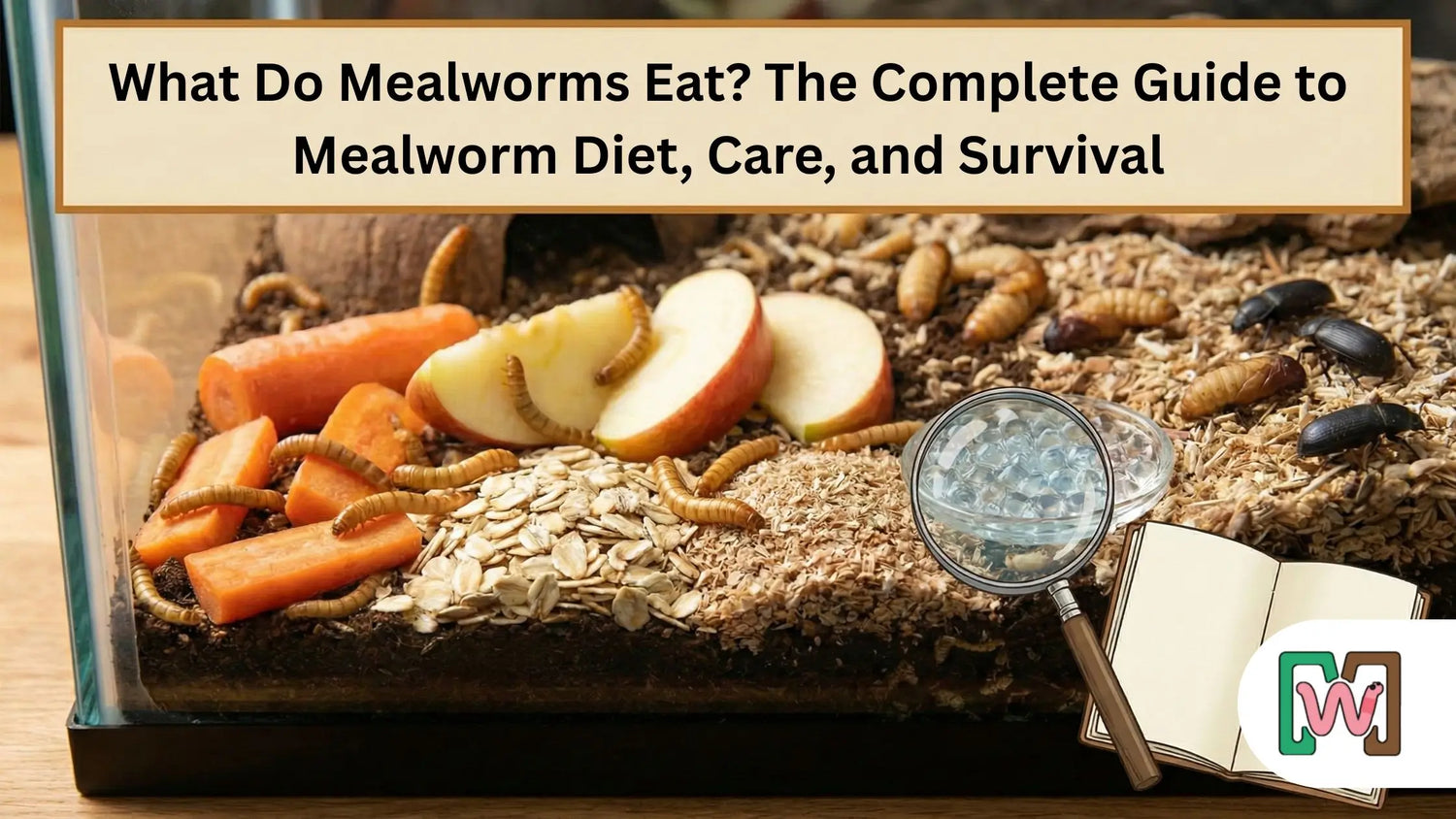
If you're raising mealworms for feeding reptiles, birds, fish, or using them for composting and educational purposes, one of the most common questions is — what do mealworms eat? Understanding their diet, hydration needs, and overall care is essential to keep them healthy, active, and nutritious.
In this comprehensive guide, we will explore what do mealworms eat, what do mealworm beetles eat, hydration options (what do mealworms eat and drink), their care, diet, survival needs, and how to keep mealworms alive longer.
What Do Mealworms Eat?
Mealworms are not picky eaters. They are natural scavengers and feed on decaying organic matter, grains, and vegetables. In captivity, you can feed them:
- Oats
- Bran (best base substrate diet)
- Wheat middling
- Cornmeal
- Apple slices
- Potato wedges
- Carrots (nutritious and hydrating)
- Cucumber
- Sweet potatoes
- Squash
These foods not only feed them but also provide moisture, which helps if you don’t want to use water sources.
👉 The primary answer to what do mealworms eat: They eat grains, vegetables, and decaying organic matter.
What Do Mealworm Beetles Eat?
Mealworm beetles (Darkling beetles), the adult stage of mealworms, have similar dietary habits.
They thrive on:
- Bran and oats
- Apple slices
- Leafy greens
- Sweet potato shreds
- Dry bread and cereal
- Organic scraps like lettuce and peels
Unlike larvae, they do not need a high-protein diet but require moisture-rich foods to lay healthy eggs.
Just like their larvae, what do mealworm beetles eat often includes grains, veggies, and moisture-rich foods.

What Do Mealworms Eat and Drink?
Mealworms don’t drink water directly from containers. Instead, they absorb moisture from foods. So, what do mealworms eat and drink? Foods with high moisture content:
| Moisture Source | Benefits |
|---|---|
| Apples | Hydration, nutrients |
| Carrots | Rich in vitamins, safe hydration |
| Potatoes | Slow-release moisture |
| Cucumbers | Hydration but should be used moderately |
Can Mealworms Eat Anything?
Mealworms eat a wide variety, but no, mealworms cannot eat anything. Some foods are dangerous or unhealthy.
🚫 Avoid these items:
- Citrus fruits (acids harmful)
- Meat or dairy (causes mold and smell)
- Salty or processed foods
- Oily or seasoned foods
- Wet foods that rot quickly
So while they’re flexible eaters, the answer to can mealworms eat anything is no. They can eat many things, but not everything.
Mealworm Care: Best Practices for Healthy Growth
Taking care of mealworms is simple, but you must provide proper food, bedding, and temperature.
Key Mealworm Care Tips:
| Care Element | Ideal Condition |
|---|---|
| Temperature | 70°F to 80°F (21–27°C) |
| Bedding | Bran, oats, or wheat middling |
| Moisture | Carrots, apples, potatoes |
| Cleaning | Remove moldy or rotten food weekly |
| Space | Provide proper ventilation and fresh substrate |
Good mealworm care ensures they grow faster, stay healthier, and become more nutritious as feeder insects.
Must Read : How to Store Your Mealworms?
Understanding a Mealworm Diet
A healthy mealworm diet enhances their protein content, making them excellent feeders for birds, reptiles, and fish.
Ideal Mealworm Diet Components:
| Category | Foods |
|---|---|
| Carbohydrates (Base diet) | Bran, oats, wheat |
| Moisture + Vitamins | Carrots, sweet potatoes, apples |
| Protein (Gut-loading) | Chick feed, alfalfa, fish flakes |
Gut-loading is feeding mealworms nutrient-rich foods 24–48 hours before feeding them to pets — this increases their nutritional value.
Adding gut-loading to the mealworm diet makes them healthier and more beneficial for animals.
What Do Mealworms Eat in the Wild?
In nature, mealworms are scavengers. They eat:
- Dead plants
- Decaying leaves
- Spoiled grains
- Rotted wood
- Animal dung
- Fungus
This is why mealworms are useful in composting and waste recycling projects.

How to Keep Mealworms Alive
Whether you use them as feeder insects, fishing bait, or for composting, keeping them alive longer is crucial.
Follow these essential steps:
1️⃣ Use proper bedding like wheat bran or oats
2️⃣ Maintain optimal temperature (70–80°F)
3️⃣ Provide moisture-rich foods but avoid mold
4️⃣ Remove waste and frass (droppings) weekly
5️⃣ Store in breathable containers like plastic bins or mesh boxes
👍 By following these simple steps, you'll easily learn how to keep mealworms alive longer and healthier.
Can Mealworms Survive in the Fridge?
Yes. If you want to slow down their growth, refrigerate them at around 40–50°F (4–10°C). This puts them in a dormant state, extending their lifespan.
Don’t freeze them — they won’t survive.
What Is the Best Bedding for Mealworms?
Best bedding options that double as food:
- Wheat bran
- Oats
- Cornmeal
- Crushed cereal
- Wheat middling
Avoid moisture-heavy bedding like sawdust or bark unless breeding beetles.
Must Read : How Do Worms Reproduce? A Complete Guide to Worm Mating, Cocoons and Growth
Final Thoughts
To summarize:
- The answer to what do mealworms eat includes grains, vegetables, and moisture-rich foods.
- What do mealworm beetles eat is mostly similar but more moisture-focused.
- Mealworms don’t drink directly — they absorb liquids from food, answering what do mealworms eat and drink.
- Can mealworms eat anything? No, but they eat a wide variety of safe organic foods.
- Proper substrate, good diet, and moisture are key to how to keep mealworms alive.
- Following good mealworm care and feeding practices ensures high-quality mealworms.
- A balanced mealworm diet improves their nutrition for birds, reptiles, and fish.
Mealworms are hardy, easy to care for, and highly useful — whether for pets, fishing, composting, or sustainability projects. Feed them right, and they’ll thrive for months!





Leave a comment
All comments are moderated before being published.
This site is protected by hCaptcha and the hCaptcha Privacy Policy and Terms of Service apply.