



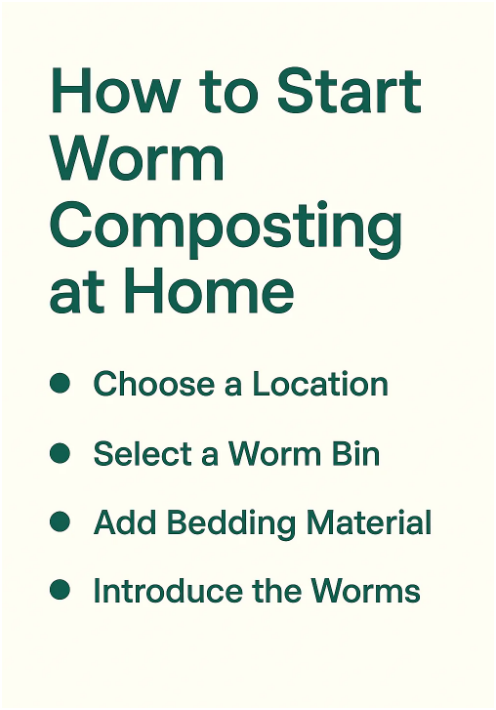
How to Start Worm Composting at Home (Step-by-Step Guide)
If you’re ready to turn your kitchen scraps into garden gold, worm composting is one of the easiest and most rewarding ways to do it. Whether you live in a house, apartment, or homestead, this guide will walk you step-by-step through setting up a worm bin that works — indoors or out.
What You'll Need to Get Started?
Before we dive into setup, gather your worm bin basics:
| Item | Details |
|---|---|
| Worm bin | Plastic tote, stacking trays, or wooden box (at least 10–14 inches deep) |
| Bedding | Shredded cardboard, peat moss, coconut coir, or pre-mixed bedding like Vermifusion |
| Moisture | Spray bottle, mister, or hand-squeezed soaking |
| Mineral grit | Crushed eggshells or oyster shell flour |
| Worms | Red Wigglers (Eisenia fetida) – 1 lb minimum for small bins |
Step 1: Choose a Worm Bin
Your bin should be:
- Opaque (worms hate light)
- Well-ventilated
- 10–14 inches deep with a lid
- Able to hold at least 5–10 gallons of material
Pro Tip: Drill holes on the sides and bottom for airflow and drainage. Place inside a second tray to catch liquid.
Step 2: Prepare the Bedding
Worms live in bedding, so make it comfy!
Bedding Mix Options:
- Shredded cardboard (brown, non-glossy)
- Coconut coir (rinsed to remove salt)
- Peat moss (neutralized with lime or oyster shell)
- Mix 2–3 parts bedding to 1 part food waste
Use our Vermifusion Bedding Mix — balanced pH and ready to go.
Moisture Test:
Squeeze a handful — it should feel like a wrung-out sponge. Too wet? Add dry bedding.
Step 3: Add the Worms
Gently place worms on top of the bedding. They’ll dig down away from the light.
Start with:
- 1 lb for a 10-gallon bin (~1,000 worms)
- 2+ lbs for faster processing
Order Red Wigglers from Meme’s Worms
Step 4: Feed Your Worms
Start light. On day 1, add a small handful of food like banana peels or lettuce.
Feeding Tips:
- Bury food slightly to prevent fruit flies
- Wait 3–5 days before second feeding
Step 5: Maintain Moisture & Cover
Keep the bin moist using a spray bottle or mister. Cover with:
- Damp newspaper or cardboard
- A breathable lid or cotton cloth
Step 6: Choose the Right Location
Indoors:
- Garage, laundry room, kitchen corner
- Avoid direct sunlight or freezing temps
Outdoors:
- Shaded, sheltered spot
- Protect from rain, heat, and pests
Ideal temp: 55–80°F (13–27°C)
Step 7: Feed Weekly & Monitor
- Feed once a week when food is mostly gone
- Chop food small for faster breakdown
- Fluff bedding occasionally to add air
Troubleshooting Chart
| Symptom | Cause | Fix |
|---|---|---|
| Bad smell | Too much food | Remove excess, add dry bedding |
| Dry bedding | Low humidity | Mist with water |
| Escaping worms | Too wet, hot, or dry | Correct conditions |
| Fruit flies | Exposed food | Always bury scraps |
When to Harvest Your Castings?
After 8–12 weeks, your bin will have dark, crumbly worm compost.
Use worm castings in:
- Garden beds
- Seed starting soil
- Houseplant top dressings
Learn how to harvest worm castings
Read Our : Worm Composting 101 (Google Doc)
FAQs
Do worm bins smell?
No — a healthy bin smells earthy, not rotten.
Can I keep my bin in the kitchen?
Yes, if properly maintained.
How often should I feed?
Typically once per week. Only when most of the last feeding is gone.





2 comments
Anonymous
Michael McMahan,
📏 Ratio When Using Oyster Shell Flour
By volume: For 1 gallon of peat moss, mix in about 2–3 tablespoons of oyster shell flour.
By bulk (1 cubic foot of peat): Add about 1–1.5 cups oyster shell flour.
For a full 3.8 cu ft compressed bale (expands to ~6 cu ft fluffed): Add 6–9 cups oyster shell flour.
💡 Since oyster shell flour releases calcium slowly, it’s forgiving — you can safely round up a little, especially if your other inputs (like manure or veggie scraps) lean acidic.
michael mcmahan
Hi Meme, discovered you recently through a referral from another worm farmer. I’m in S.W. Fla-currently holding back on a worm purchase till we get a bit cooler temps here. So exploring the info on the website… and while I’ve had some measure of success( except for,i think, not watering the bedding).. realize I could use some fine tuning. My use is simply to provide castings and tea for a small home garden. Anyway,a couple questions i have at this time….when using peat as bedding,is there a ratio peat to lime- say in a volume measure, a gallon of peat….?
and my wrigglers made more what i would call"muck",that is wetter castings than what i’ve seen in videos???
looking forward to getting a restart with your worms, and some cooler weather! Michael
Leave a comment
All comments are moderated before being published.
This site is protected by hCaptcha and the hCaptcha Privacy Policy and Terms of Service apply.